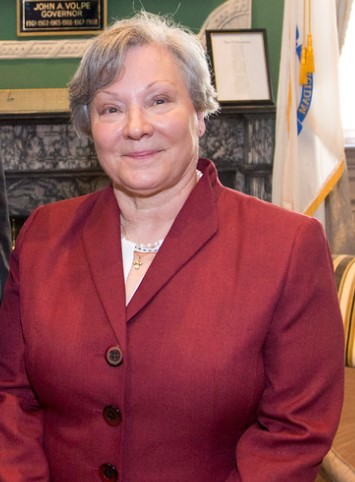
Showing posts with label Maria Mossaides. Show all posts

Sunday, November 30, 2025

Who watches the watchdog? (In Massachusetts and every other "child advocate" / "child welfare ombudsman" office.)

 The Massachusetts Legislature has named a nominating committee to recommend candidates to become the next leader of the state’s Office of Child Advocate.  I have written often about the failings of the current Child Advocate. Given who is on the committee, and how badly they organized a recent "listening session” I’m not optimistic that they will make a wise choice. 

Nevertheless, I sent them the written statement below. The recommendations concerning how the office should operate and how to restructure its governance apply not only in Massachusetts but also to most if not all similar offices.

_________

Thank you for the opportunity to submit this written statement.  I will conclude it with an introduction to my organization and our long history following child welfare in Massachusetts. 

But I want to start with the heart of the matter: what I hope you will look for in the next Child Advocate.  To do that, I want to start more than 3,700 miles from Massachusetts – in Sweden. 

That was the scene of the latest, and perhaps most horrifying, in a long line of studies documenting the enormous inherent harm of tearing children from their families, and the need to take this action far less often than Massachusetts does it today. 

The Swedish study looked at more than 20,000 cases. Conducted by a scholar based both in Sweden and at MIT, and using a methodology pioneered by another MIT scholar, the study compared the fate of children placed in foster care to that of children alleged to be comparably maltreated, but left in their own homes. Please note the part about comparably-maltreated. The foster youth did not have worse problems; they did not suffer worse alleged maltreatment. 

And yet, by age 20, those placed in foster care were more than four times more likely to have died.  Let me repeat that: More than four times more likely to be dead. The most common cause: suicide. 

One might argue, I suppose, that somehow the Swedish foster care system is vastly worse than the one in Massachusetts. But it would be hard to make that argument with a straight face. 

The findings from the Swedish study come on top of all those other studies, one after another after another, documenting worse outcomes for foster youth than for allegedly comparably-maltreated children left in their own homes. 

That’s not because foster parents are evil; most want to do the very best for the children in their care. Even group homes and institutions often are staffed by well-meaning people. Rather, it’s a testament to the inherent harm of family separation. Think back to the children torn from their parents at the Mexican border. Listen to their cries in this audio. Yes, there is a difference: caseworkers for the Department of Children and Families almost always mean well. But the children cry out the same way for the same reason.

 None of this means that no child ever should be taken from her or his parents. But it does mean that foster care needs to be used sparingly and in small doses.  But for decades, Massachusetts has prescribed mega-doses of foster care. As of 2024, Massachusetts was tearing apart families at a rate more than 40% above the national average – even when rates of child poverty are factored in. 

All this means that Massachusetts needs a Child Advocate who understands this, a child advocate who understands that in child welfare, the errors, including the worst errors, go in all directions, a child advocate who understands the need to call out, and learn from, the errors in all directions. 

Perhaps the only thing about Massachusetts child welfare about which everyone agrees is that caseworkers are overwhelmed and underprepared, rushing from case to case.  Under those circumstances, it should be obvious that there will be terrible mistakes in all directions. An office that finds errors only one way, concluding that workers constantly leave children in dangerous homes and never take children needlessly – or vice versa – probably has a structural problem and definitely needs better leadership. 

Yet for the current Child Advocate, the errors go only one way. Her reports follow the same pattern: Find the worst horror story, draw sweeping conclusions from that single case, and press for measures bound to lead to taking away more children. That approach only further overloads the system, doing enormous harm to children needlessly taken, while leaving workers with less time to find the relatively few children in real danger - making the next horrible tragedy more likely.  An advocate who sees error in only one direction encourages a system that makes all children less safe. 

The one time the current advocate accidentally faced real accountability was revealing. She led a commission on mandatory child abuse reporting laws. For more than a year, that commission heard only what the child advocate wanted it to hear – so its initial draft called for further expanding mandatory reporting. 

But then, when OCA had to hold a public hearing, a bit like this one, the commission heard from all sides. They heard the evidence that mandatory reporting has backfired, increasing the danger to children. Commissioners were, in their own words, “shocked,” “surprised” and “taken aback.” 

The commission rebelled. It chose to make no recommendations at all. 

The other key reason to change OCA’s approach is the simple fact that the current advocate’s approach hasn’t improved anything.  The current Massachusetts Child Advocate has been in office for ten years. In that time, she’s produced a ton of sensational headlines. But there is no evidence that any of it actually has made Massachusetts children safer. 

            Massachusetts children need an advocate who will demand accountability, and demand that we learn the right lessons both when children are left in dangerous homes and when children are torn from everyone loving and familiar and consigned to the chaos of foster care. 

            A child advocate who understands that the errors go in all directions would commit to a key method for discovering errors in all directions: an annual audit of a random sample of cases to assess system performance and make recommendations. 

The audits should be conducted by a diverse team of stakeholders — former family defense attorneys and former child abuse prosecutors, for example. At my organization’s suggestion, New Jersey’s first child advocate, Kevin Ryan, pioneered a similar approach 19 years ago, producing a report that found — no surprise — errors in all directions.  

Restructuring the office 

            Though it is beyond the mandate of this committee, I want to urge it to recommend not only a new child advocate but a new structure for OCA. 

            We all know the cliché: Knowledge is power. The corollary, though, is that anyone who has a near-monopoly on knowledge will have enormous power to shape public opinion. That enormous power brings enormous potential for abuse. 

Agencies like DCF tend to be more secret than the CIA. So whoever becomes a state’s “child advocate” has that enormous power. But while such offices are conceived as a way to watch over state child welfare agencies, lawmakers sometimes forget a crucial question: Who watches the watchdog? 

So a new child advocate isn’t enough. I hope you will urge lawmakers to restructure the office. 

Right now, as you know, three public officials name the child advocate. S/he serves a fixed five-year term. While the advocate demands accountability from everyone else, s/he is accountable to – no one. No one can set her priorities, no one can remove her except for cause, no one can fact-check her, no one can serve as a check and balance against any biases s/he may bring to the job. 

Many who spoke at this committee’s “listening session” spoke of the need for the child advocate to be independent. He or she already is entirely independent – independent to a fault. Because while it is reasonable, indeed essential. that OCA as an office be insulated from political interference, someone still needs to watch the watchdog.  Here’s how it could be done: 

OCA should be governed by a board of directors that is diverse in terms of race, ethnicity, sexual orientation and disability; vital for a state with a child welfare system where Black, Native American and Hispanic children are grossly overrepresented. It also must be diverse in terms of lived experience and viewpoints. The board should include current and/or former foster youth, foster parents, kinship foster parents, birth parents who lost children to the system, current or former frontline caseworkers, representatives of the disability and LGBTQ communities, child abuse prosecutors and family defense attorneys. 

But it can’t stop there. Mental health and domestic violence are constantly cited as reasons for child welfare intervention. So the board would need mental health practitioners, people who work with survivors of domestic violence, and survivors themselves.  In addition, in Massachusetts, as in most states, the system focuses almost exclusively on poor people, often confusing poverty with neglect. So the board should have leaders of anti-poverty organizations. 

Then, after what would, no doubt, be vigorous debate, this group should choose the Child Advocate. The board would also set the office’s priorities, determine its approach and review all reports before publication. 

This way, OCA as an office remains fully independent, but the leader of that agency is subjected to internal checks and balances to increase the likelihood that recommendations will be wise and unbiased. 

Because independent does not equal unbiased. I was surprised to hear one speaker equate the two during the listening session. 

We all have biases. And in a field as fraught as child welfare, the biases can run deep. Whoever is named the next child advocate almost certainly will have a background in the field. The personal experiences one encounters in any part of this field can be searing. And while any honorable leader seeks to check and control her or his biases, that is not enough. They need the guidance of others, in this case, a board whose diversity of personal experience allows for a check and balance against the biases, however unintended, of any one individual. 

The problem of bias would be even worse if, as seemed to be suggested by one speaker, the child advocate were allowed to become a virtual dictator, whose every recommendation would have to take effect. This would be an abdication of responsibility by the state’s elected representatives. They are ultimately responsible for determining policy and practice in child welfare, and every other field subject to governance by the commonwealth, on behalf of those they represent.

            This committee, of course, does not have the power to make the changes I recommend here. That, too, would rest with the elected representatives of the people. But it does have the power to recommend a restructuring. And it certainly has the power to recommend a child advocate who understands that the errors go in all directions. 

            Thank you.

About NCCPR 

The National Coalition for Child Protection Reform is a small nonprofit child advocacy organization dedicated to trying to make the child protection system better serve America’s most vulnerable children. We are a Virginia-based organization with Massachusetts roots. 

 The group was established at a 1991 Harvard Law School conference by the late Betty Vorenberg, a former member of the National Board of the ACLU, former Deputy Director of the Department of Public Welfare during the Dukakis Administration and former Deputy Director of the Massachusetts Advocacy Center. 

You can read all about our distinguished Board of Directors here https://nccpr.org/nccpr-board-and-staff/ and about what others in the field say about us here: https://nccpr.org/what-others-say-about-nccpr/   My own background is in journalism: 19 years as a practitioner, including two at WGBY Public Television in Springfield, three as a professor.  I spent much of my time covering child welfare, work that culminated in publication of a well-received book, Wounded Innocents (Prometheus Books, 1990, 1995). 

Tuesday, March 26, 2024

Profiles in cowardice: Terrified of demagogic politicians, family police agencies in two states prolong the agony of a five-year-old and his mother.

All of the love, compassion and common decency in this case came from people not employed by family police agencies.

Massachusetts "Child Advocate" Maria Mossaides was not involved in this
case. Had she been asked, she probably would have made the right call.
But, though it wasn't her intent, she's fomented a climate of fear
that helped prolong this child's agony. 

The New York Times published a deeply reported, deeply moving story Sunday about one immigrant mother’s desperate quest to find and reunite with her five-year-old son.  It is almost a miracle that she ultimately succeeded. 

Olga fled her abusive husband in Honduras, with her seven-year-old daughter.  Her son was cared for by his grandmother – until the husband took the child by force and also made his way to the United States. 

Olga settled with a relative in Florida.  The husband wound up in Massachusetts – and the boy, Ricardo, wound up in foster care – because the father was abusing him too. 

When Olga finally tracked Ricardo down, things should have been simple.  She was a fit parent with a steady job and a good home.  Massachusetts could have reunited mother and son immediately.  But then the ugly politics of two states got in the way. 

Climate of fear 

Let’s start with the ugliness in Massachusetts.  As the Times story explains, in that state 

the child protection system was at that very moment embroiled in a cross-border custody scandal. 

It involved a 5-year-old girl named Harmony Montgomery, a ward of the state whose father, a New Hampshire resident, had sought her custody. Abiding by its internal regulations, the Massachusetts [Department of Children and Families] asked New Hampshire to approve the move under a 62-year-old agreement called the Interstate Compact on the Placement of Children. But the judge disagreed with this request, considering it an infringement on the father’s right to parent his child, and did not wait for New Hampshire to respond. 

The interstate compact was created primarily to govern cross-border foster care moves. Whether it applies to fit parents has been widely debated across the country, and high courts in at least a dozen states have said it does not. 

The National Association of Counsel for Children agrees. “Applying the compact to parents who simply live out of state, when there is no finding or even allegation of wrongdoing, is unconstitutional and harmful to children,” said Allison Green, its legal director. 

But in late 2019, two years after the Massachusetts judge awarded custody to Harmony Montgomery’s father, the authorities in New Hampshire revealed that the girl was missing and presumed to be dead. 

Her shadow hung over Ricardo’s case. Nobody in the Massachusetts child-welfare system wanted to take another potentially deadly risk involving the interstate compact. 

But that climate of fear didn’t create itself.  It’s been nurtured at every turn by the state’s foremost advocate for a take-the-child-and-run approach to “child welfare,” Maria Mossaides.  She runs the state’s “Office of the Child Advocate.”  Yes, the same Maria Mossaides whose own commission studying mandatory child abuse laws rebelled and refused to accept her recommendations after they realized she hadn’t told them the whole story about these laws and their consequences. 

Mossaides has taken every opportunity to exploit the tragic death of Harmony Montgomery to undermine efforts to keep families together – and even to try to effectively silence children in court.  (In fact, Harmony Montgomery almost certainly would be alive today had Massachusetts not rushed to take her from the one person in her life who truly loved her: her mother). 

Mossaides had no direct involvement in Ricardo’s case.  I suspect had she been asked even she would have urged that the family be reunited.  But, while it never was her intent to make things worse for Ricardo, or any child, she shares a lot of responsibility for the climate of fear in Massachusetts that prolonged this family’s agony and the agony of many others who have not caught the attention of the media.  Indeed, though Massachusetts media are doing a notably better job of covering these issues in general, year after year, they still give Mossaides a free pass. 

Florida fails, too 

With Massachusetts DCF too cowardly to do the right thing, they invoked the ICPC and sought direction from its equally execrable counterpart in Florida, also called the Department of Children and Families.  They too were too cowardly to do the right thing.  As the Times story explains: 

When Olga’s advocates phoned her caseworker’s supervisor, according to Nick Herbold, the boy’s first foster father, the woman told them: “Hey, we’re in Florida. She’s undocumented. There’s no concern about the home. There’s no concern about safety with the mother. It’s just the fact that politically we cannot sign off on it.” 

And where might that come from? Again, from the story: 

Asked whether it was now Florida’s policy to refuse custody based on immigration status, Miguel Nevarez, press secretary for the state’s Department of Children and Families, neither answered directly nor denied it. “Cases regarding one’s legal or illegal status wouldn’t exist if the federal government enforced our immigration laws,” he said. 

In Olga’s case, that line of thinking trickled down to South Florida from Tallahassee, where Gov. Ron DeSantis signed a bill last spring that he proudly called “the strongest anti-illegal-immigration legislation in the country.” 

The people who did the right thing 

The other key lesson in this story involves who did step up – time and time again.  

Had the Massachusetts Department of Children and Families set out to deliberately traumatize Ricardo,  it couldn’t have done better than it did, with decision after decision that would have undermined his stability.  He was saved from DCF’s lousy decisions by two truly extraordinary foster parents, his teachers and his school principal.  They showed the courage, tenacity and generosity that family police agencies in two states did not. 

Indeed, in the entire story, there is no hint of compassion, caring, or sacrifice from anyone within the family policing establishment.  Please think about that the next time anyone in that establishment blathers about children’s “well-being.” 

Monday, March 4, 2024

NCCPR in CommonWealth Beacon: Mass. on wrong track with child protection policy; Separating kids from families should be a last resort — but it often isn’t

Late in 2019, the Massachusetts Legislature created a commission to study mandatory child abuse reporting. Like all states, Massachusetts requires most professionals who deal regularly with children to report any suspicion of child abuse or neglect. 

The commission was chaired by Maria Mossaides, head of the state Office of the Child Advocate. For well over a year the commission heard only those Mossaides wanted them to hear. But at the very end of the process, with a set of draft recommendations to expand mandatory reporting ready for a vote, the commission held its only public hearing.

Experts from all over the country warned the commission that it was on the wrong track. They joined Massachusetts advocates in describing how mandatory reporting has backfired, traumatizing countless children and families and deluging the system with false reports, stealing time from finding children in real danger.

Commission members said they were “shocked” “surprised” and “taken aback.”  They rebelled. The commission made no recommendations at all. 

Now, Mossaides is at it again. ...

Read the full column in CommonWealth Beacon 

Tuesday, January 16, 2024

Colorado shows how to get a task force on mandatory child abuse reporting – less wrong

The Colorado State Capitol

 In a surprising interim report, the task force says step one is narrowing definitions of abuse and neglect so they’re not conflated with poverty.


 The Task Force has agreed that it must first address Colorado’s current definition of child abuse and neglect. … Colorado’s current definition of abuse and neglect is too broad and conflates several circumstances – such as poverty – with child abuse. Without first addressing the definition of abuse and neglect, the Task Force cannot meaningfully recommend changes to the current mandatory reporting system or law.

--Interim Report of the Colorado Mandatory Reporting Task Force

 All over the country, there’s a knee-jerk response to a horror story that in any way may have involved a failure by someone to report child abuse: The state legislature rushes to expand which professionals are forced to report any suspicion of “child abuse” or “neglect.” (Except, of course, in the 18 states where these laws already apply to everyone.  In those states all lawmakers can do is further expand what must be reported.) 

As the research summarized in NCCPR’s new Issue Paper makes clear, this has backfired – creating a massive child welfare surveillance state that scares families away from seeking help, overloads the system with false reports, trivial cases and poverty cases, and leaves workers even less time to find the few children in real danger.  In other words, mandatory reporting makes all children less safe. 

When legislatures don’t actually expand mandatory reporting themselves, they create a committee/task force/commission or maybe even a blue ribbon commission to tell them how to do it.  The committee/task force/commission spends a year or two on a report that does just that. 

That was the original plan in Massachusetts.  The state’s most fanatical advocate for a take-the-child-and-run approach, state “Child Advocate” Maria Mossaides, was named to chair a commission on mandatory reporting.  She led the commission by the nose, let them hear only what she wanted them to hear, until, finally, she had to hold a public hearing.  Almost every witness told the Commission it was on the wrong track, and should recommend curbing or abolishing mandatory reporting instead of expanding it.  Having finally heard what Mossaides didn’t want them to hear, Commission members said they were “shocked” “surprised” and “taken aback.”  They wound up recommending nothing. 

Then it was Colorado’s turn.  It seems everyone in Colorado learned from Massachusetts’ mistakes – but no one learned quite enough. 

First, the good news 

The learning curve begins with the Colorado Legislature, which included in its charge to the Colorado Mandated Reporter Task Force a requirement to examine how implicit bias in mandatory reporting disproportionately affects families of color, people with disabilities and under-resourced communities. 

It continued with the chair of the Colorado Task Force, Mossaides’ Colorado counterpart, Stephane Villafuerte, the state’s “Child Protection Ombudsman.”  I’ve been quite critical of Villafuerte in the past, both concerning a different task force she chairs, on residential treatment, and her office’s previous work concerning mandatory reporting.  But this time, to her credit, she exposed the commission members to a full range of viewpoints. 

Yes, they heard from the usual suspects, such as Casey Family Programs and Colorado’s own Kempe Center.  But they also heard from Jerry Milner, once the federal government’s highest-ranking official overseeing child welfare, now co-founder of the Family Justice Group, and someone who has emerged as a leading opponent of the vast overreach of the current system.  They also heard from Prof. Kelley Fong, whose landmark book Investigating Families has quickly emerged as the gold standard for research in this field. 

Given that the Task Force heard from the full range of viewpoints, it shouldn’t have been a shock when
the Task Force concluded it would be a terrible idea to expand who must report and when they must report it until the Legislature first narrows down what it is they should report.  So the Task Force is actually going to put the horse before the cart and first address how to do that.  As the interim report explains: 

Colorado’s current definition of abuse and neglect is too broad and conflates several circumstances – such as poverty – with child abuse. This effectively requires mandatory reporters to report circumstances that may not involve the safety or well-being of children.

The Task Force also will be looking into two other areas that have the potential to lead to constructive recommendations: 

The development of warmlines and alternative reporting methods. 

This could be useful if these alternatives lead to places in no way connected with family police agencies, and if any mandated reporter who takes advantage of these alternatives is immune from any penalty for “failure to report.” (In other words, if these alternatives provide an off-ramp from the mandatory reporting expressway.) 

Consideration of possible exemptions for professionals working with legal representation teams and/or victims of domestic violence or sexual violence. 

Survivors of domestic violence are among those most adversely affected by mandatory reporting. Some survivors, usually mothers, are scared away from leaving their abusers for fear that their children will be taken away because they “failed to protect” the children from seeing them being beaten.  Yes, that really happens

And, obviously, the effectiveness of a social worker working with a family defense attorney to, say, craft an alternative to the cookie-cutter “service plans” typically issued by family police agencies is limited if they are, themselves, mandatory reporters. 

Now the bad news 

When it comes to mandatory reporting nibbling around the edges isn’t going to accomplish much.  Narrowing definitions is a good idea, but mandatory reporters are still going to be afraid not to report.  Exempting some professionals will still leave most professionals required to report and afraid to do anything else. 

When it comes to mandatory reporting, the most meaningful solution, by far, is to abolish it.  Abolishing mandatory reporting does not mean abolishing reporting; it would simply free professionals to exercise their professional judgment – and send a vital message that every family problem is not a family policing problem.  

Although the Colorado Legislature clearly didn’t contemplate this, the Task Force is free to give lawmakers whatever advice it pleases.  But, while not nearly as bad as Mossaides, Villafuerte appears to have foreclosed this option. 

The Legislature also appeared obsessed with promoting the least helpful solution of all – that all-purpose family policing establishment cop-out: more “training.”  But even if a few hours of “training” could magically cure a lifetime of biases, it still wouldn’t solve the problem of mandated reporters being afraid not to report.  

But at least the Colorado Task Force might get some people to think twice about mandatory reporting.  In most states, they’re not even thinking once.

For more on mandatory reporting in general, and the Colorado Task Force in particular, see this excellent story.

Sunday, July 23, 2023

Massachusetts pilots the most promising reform in child welfare. Guess who’s trying to undercut it.

 The Massachusetts Legislature needs to step in and provide the funding to make the approach taken by the Family Preservation Project available in every case.  That will require finally standing up to the state’s Fearmonger-in-Chief 

There’s a new program underway that is exactly what children need in a state where they are torn from their families at a rate 60% percent above the national average. 

In Springfield, Mass. the Family Preservation Project provides high-quality interdisciplinary family defense.  Families facing investigation by the state family policing agency, the Department of Children and Families, get a lawyer, a social worker who can come up with alternatives to the cookie-cutter “service plans” issued by DCF, and a parent advocate, usually someone who’s been through the system himself or herself. 

This is the model that’s proven so successful in New York City – where a comprehensive evaluation found that it reduced time in foster care with no compromise of safety.  It’s one reason New York City’s rate of removal is well under one-third the rate of Massachusetts, even when rates of child poverty are factored in.   


New England Public Media reports that the Western Massachusetts program is the first of five to be overseen by the Massachusetts Law Reform Institute with a two-year federal grant. Even DCF says it favors the program (perhaps because they don’t have to pay for it). 

What kind of cases does the program see?  Here’s how the NEPM story begins: 

On an afternoon last January, a 49-year-old artist and mother named Cara was working a warehouse shift, one of two jobs she held to support her family. She was still sharing a house in Greenfield, Massachusetts, with her ex-partner and had left their 4-year-old daughter in his care.  But he got drunk, and Cara — not sure what to do — ended up calling the police. 

Cara, who asked to keep her last name private, said she had already been in touch with a domestic violence organization about her ex. After the drinking incident, she said, that organization called [DCF]. 

“I thought that when DCF stepped in, that it would be an outside authority that could put this situation in control,” she said. “And it did the opposite.” 

The state opened an investigation against Cara for child neglect, saying she should have known her ex might get drunk. That meant she could lose custody of her daughter.  

(Let’s pause here to consider: By that standard President Gerald R. Ford should have been charged with neglect – repeatedly – because his partner got drunk – a lot. She also abused prescription opioids and had mental health issues.  Yet, because the Ford family had money, Gerald’s partner – Betty – could raise their children.) 

In Cara’s case, DCF never should have come to the door.  But at least the agency itself referred the family to the Family Preservation Project, which found a way to keep the family together, sparing a four-year-old from all the trauma of foster care – and the high risk of abuse in foster care itself. 

Enter the Fearmonger-in-Chief 

Mass. "Child Advocate"
Maria Mossaides
Who in the world could be against something like that?  If you’ve followed Massachusetts child welfare at all, you know exactly who:  Massachusetts’ Fearmonger-in-Chief, state “child advocate” Maria Mossaides. 

● Mossaides is the one who led – and misled – a commission on mandatory reporting for a year; making sure the other members of the commission heard only what she wanted them to hear.  When they finally heard the other side of the story, commission members said they were “shocked,” “surprised” and “taken aback.” 

● Mossaides is the one who told the commission that repealing mandatory reporting would cost the state $400 million.  The actual figure would be, at most, more like $1.5 million.  

Mossaides is the one who has suggested that racial justice is at odds with child safety and racial bias isn’t a problem. Indeed, she seems to think a little racial bias might be good. 

So, keep Cara in mind as you consider what Mossaides told NEPM, and as we parse her comments. 

“I know that the advocacy community conflates neglect with poverty," Mossaides said. "That is not what the Office of the Child Advocate sees. What we see is actual risk to children or imminent risk to children.” 

That’s exactly what she told her mandatory reporting commission when she was misleading it.  As we explained at the time:

But, Ms. Mossaides, you don’t see a typical cross-section of cases – you focus on the most horrible cases.  If you really wanted to know what DCF does in typical cases, you would do what your former counterpart in New Jersey, Kevin Ryan, did when he was that state’s child advocate in 2005.  Not only did he look at a random sample of cases, he made sure the casereading would be objective by having the cases read by two groups with opposite views of the extent to which the state should intervene in families. 

Even DCF’s own annual report makes clear that the neglect cases OCA sees are rare exceptions.  Of all the reports alleging neglect – a total of 63,101, 16 were fatalities.  Another 1,121 involved a substantiated allegation of a substance-exposed newborn – and contrary to the fearmongering from the foster care establishment – and Mossaides --  not every such case by a longshot involves a parent endangering her child. The remainder, 14,345 cases, are labeled simply as “neglect.”  

In her interview with NEPM Mossaides made clear she prefers 

“another new program, based at the nonprofit agency Plummer Youth Promise, that provides mediators to work with parents and the child welfare agency.” 

That program sounds like a warmed-over version of family team meetings / team decision-making – which always put families at a disadvantage.  And, according to its own brochure, the Plummer program encourages something called “concurrent planning” which further stacks the deck against families and in favor of foster parents who want to adopt.* 


The program Mossaides prefers to the Family Preservation Project returns families to the status of supplicants. 

Then it was back to the fearmongering.  Mossaides told NEPM 

most of the cases her office reviews involve parents with substance use problems. She’s concerned the advocates could be too aggressive in siding with those parents and downplaying the risk to children. 

Well, for starters once again we have the problem of Mossaides seeing only what she chooses to see – or in this case “review.”  Of all the cases of children forced into Massachusetts foster care in 2021, 63% did not even involve an allegation of substance use.  And not every case of substance use endangers children – just ask all the parents in “pot smoking mom” Facebook groups.  

And here’s a news flash: It’s a lawyer’s job to be aggressive on behalf of her or his client.  But that doesn’t mean they get to decide what happens, and, indeed, the deck is stacked against lawyers for families at every turn.  Only when all sides have aggressive advocacy can judges get the information they need to make the right decisions. 

And then Mossaides says: 

“What I don't want is, it's just going to get more adversarial.” 

Actually that’s exactly what the system needs.  The non-adversarial approach dates back to the first juvenile court in 1899.  Then, juveniles accused of crime were denied all rights because supposedly everyone was just there to help them.  The U.S. Supreme Court put an end to that, at least in theory, in 1967 with its landmark decision In re: Gault.  As Justice Abe Fortas wrote: 

“[A] child receives the worst of both worlds:…he gets neither the protections accorded to adults nor the solicitous care and regenerative treatment postulated for children. … Under our Constitution, the condition of being a boy does not justify a kangaroo court." 

Unfortunately, much of child welfare operates with a pre-Gault mentality.  That boils down to: Just let us at DCF exercise our untrammeled power – after all, we’re only there to “help.” So families should bow and scrape, and jump through all the pointless hoops we set up for them.  They should beg forgiveness for their sins and, if we deign to return the children, thank us profusely for our benevolence. 

This is the world Mossaides is desperate to maintain – or make worse, since she seems to think DCF doesn’t tear apart enough families.  She is so desperate that not only does she want to undermine legal representation for parents she even wants to undermine it for children. 

But wait, there’s more. Mossaides then claims that she’s the one who doesn’t want more kids taken away and it’s those awful lawyers with their “adversarial” mindset that might cause more removals: 

“And what will happen is less cooperation, less willingness of a family to work with the department, which will inevitably lead to more children coming into custody.” 

Except it hasn’t.  As noted earlier, the New York City model significantly reduced foster care.  The program on which the Family Preservation Project is based, the Detroit Center for Family Advocacy handled hundreds of cases before it had to close because it couldn’t get funding.  None of the children in those cases had to be placed in foster care. 

And, as NEPM points out “At the Springfield location, out of 50 clients so far, all but one has kept custody of their children.” 

And yet, Maria Mossaides apparently wants us to believe that she is just trying to keep kids out of foster care while high-quality family defense will result in more children taken away.  

Persecuting survivors of domestic violence 

The two cases profiled in the NEPM story also illustrate another tragedy Mossaides seems keen to perpetuate: the persecution of mothers who are survivors of domestic violence. 

In Cara’s case, she had sought help from a domestic violence organization – and they’re the ones who called DCF.  I hope that’s only because they felt that, as mandated reporters, they had to.  

These cases can be among the most tragic – because the emotional trauma of child removal is actually worse for a child when the child is being taken because the mother “allowed” him to “witness domestic violence.”  One expert said taking a child in such circumstances is “tantamount to pouring salt into an open wound.”  

Yet when proposals were made to the mandatory reporter commission to exempt people who help domestic violence victims from mandatory reporting, Mossaides opposed them.  Her approach to this issue can be boiled down to “Please pass the salt.” 

Fortunately, in both Cara’s case and the other discussed in the story, the Family Preservation Project kept the children with their mothers. 

But the project is small.  Even when there are four more of them, they can deal with only a small fraction of the families into which DCF intrudes every year.  So the Massachusetts Legislature needs to step in and provide the funding to make this kind of representation possible in every case.  And, by the way, because foster care is so expensive, and because in many cases the federal government will reimburse half the cost, the program is likely to be cost-neutral or even save the state some money.  

But step one is to stop being fooled by Maria Mossaides. 

Mossaides consistently ignores research and best practice in favor of what she “sees.”  But she sees only what she wants to see. 

The children of Massachusetts will be a whole lot safer when, at long last, politicians catch on and say to Maria Mossaides: We don’t give a damn what you “see” – because you are willfully blind. 

* -- Under concurrent planning, people who desperately want to adopt a child – and the child welfare agencies that desperately want those people to adopt -- are told, in effect: “Now remember, your first goal is to work with the birth parents and do everything you can to help them get the child back – but if, by some chance, you fail at this then you get what you really want – someone else’s child for your very own.” 

One parent in New Jersey was honest enough to tell The New York Times what she called “the mantra” of parents in this kind of program, which is: “I’m on the next plane to South America if they think they’re getting this baby back.” 

Meanwhile, the caseworkers are supposed to work equally hard to get the child adopted by people they like and can identify with – typically middle-class foster parents - as they do to try to reunite the child with people they often can’t stand, overwhelmingly poor disproportionately minority birth parents.


Tuesday, June 27, 2023

When the journalism of child welfare fails, part one: The Boston Globe’s flying donkey


● In what is presented as a news story, the Globe finally acknowledges there’s a controversy over whether mandatory child abuse reporting is a good idea – and then devotes itself largely to making the case for keeping it.   

● The story accepts the false claim that curbing racial bias somehow compromises child safety – and ignores the mass of readily-available evidence that mandatory reporting makes children less safe. 

● The state’s “child advocate” suggests that, under these circumstances, racial bias isn’t a problem at all. Indeed, she almost seems to be saying a little bias might be beneficial. 

● In a story dealing with racial bias, it appears that only one of those quoted – briefly - is nonwhite. (For the Globe, that’s actually an improvement.) 

During the final episode of The Mary Tyler Moore Show Ted Baxter, the pompous not-very- bright anchorman, briefly tries to take a stand on principle and do the right thing.  He quickly caves. 

News writer Murray Slaughter says no one should be too hard on Ted.  As Murray puts it: “When a donkey flies, you don't blame him for not staying up that long." 

The most generous interpretation of a recent examination of mandatory child abuse reporting by The Boston Globe is that the story is a flying donkey.  Until now, you’d never so much as see mandatory reporting questioned in the Globe. With a few notable exceptions (generally written by nonwhite reporters), the Globe follows the party line of those whose 19th Century counterparts proudly called themselves “child savers” – that massive intervention into families is needed to keep children safe.  Decades of such coverage is part of the reason Massachusetts tears apart families at a rate more than 60% above the national average, even when rates of child poverty are factored in.

So when a big story by Globe reporter Matthew Stout actually acknowledged that mandatory reporting is controversial, the donkey flew.  But it didn’t stay up long. 

Among the key facts the story left out: 

● The enormous harm to children from false allegations, constant surveillance, and needless removal. 

● The stunning number of expert individuals and organizations who once supported mandatory reporting but since had second thoughts.

● The enormous body of research showing that mandatory reporting backfires – making children less safe. 

● The particularly horrible impact of mandatory reporting on the children of battered women. 
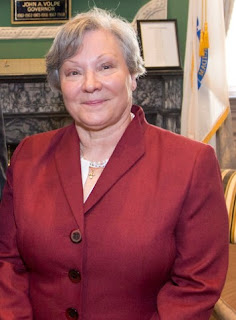
Mass. "Child Advocate" - and Boston
Globe favorite -- Maria Mossaides
● The way the state’s child advocate, Maria Mossaides, (who gets the Globe’s usual reverential treatment in this story) misdirected her own commission on mandatory reporting to the point that commission members rebelled. 

The failure is all the more egregious since all of this information is readily available in the records of Mossaides’ commission, which studied mandatory reporting between 2019 and 2021.  A huge body of witness testimony includes citations to the studies documenting all the points noted above.  If the Globe pored through this testimony – or even glanced at it – it is not reflected in the story.  Our own analysis of the commission’s work, with links to all that information the Globe left out, is available here.  A selection of links to some of the key testimony and research is here.  (Citations for any statistic or study not otherwise linked in this post can be found in either of these two documents.) 

Section-by-Section 

With that, let’s go through the story section by section. 

The donkey gets off the ground when it starts by profiling Kayla Ford, a mother who was victimized by repeated needless mandatory reports and investigations by the state family police agency, the Department of Children and Families.  (Oddly, for a story discussing racial bias, they chose a white mother.)  

The mother had an addiction to pills that turned into a heroin habit (A condition somewhat similar to that certain other Ford who, instead of being turned in, was treated by media as a hero – but I digress.) 

As soon as Kayla Ford learned she was pregnant she got treatment, including medication-assisted treatment – in this case Suboxone.  That is considered best practice – it is also often the subject of virulent prejudice among family police agencies.  And since this is Massachusetts, where the Puritan heritage remains strong, even medication used to prevent addiction makes you subject to automatic mandatory reporting.  That happened to Ms. Ford when her first child was born.  And her second. And her third, even though by then she’d been sober for six years. 


Even Mossaides concedes this goes a tad too far and is willing to see the state mandatory reporting law tweaked slightly for such cases. 

But while the story talks about how much strain all this put on the mother, it omits the most important part: The enormous harm needless investigation does to children.  

So it’s understandable that someone would write this in the comments section under the story: 

Sounds to me like in Ms. Ford’s case DCF involvement was not harmful in the end. Her kids were not taken from her and she is still sober. I’m struggling a bit to identify the problem mandatory reporting caused in her case. 

The commenter is struggling because: 

● The story didn’t explain that a child abuse investigation is not a benign act.  Having a stranger come to the door, awaken children in the middle of the night, pull them aside and question them about the most intimate aspects of their lives can be an enormously traumatic experience for a child. The caseworker will demand to see every room and look into every closet and cupboard. Often, it’s all accompanied by a stripsearch looking for bruises. If anyone else did that, it would be sexual abuse.  And if the family is put under “supervision” all this can happen over and over and over.  

As attorneys from The Children’s Law Center, a group that represents children in family policing cases - -  explain: 

children may experience “surprise, shock, [and] chaos” during a child welfare investigation, as well as a “loss of control,” “powerlessness, helplessness,” and a “sense of guilt or failure.” … Children involved in a child abuse or neglect investigation “may not know what’s going to happen in the examination or the interview,” which can be particularly traumatic because children are taught from a young age “not to talk to or trust strangers and not to let strangers touch their bodies; and these are strangers.” 

It’s no wonder parents of children who’ve been forced to endure these investigations sometimes speak of their children never wanting to let them out of their sight or diving under the bed when there’s a loud knock at the door.

● The story quotes Ford as saying “I remember toward the end of my third pregnancy being terrified that they’re going to bring DCF back into my life. I was thinking about that more than the delivery.” But the story does not mention the potential harm that can cause for a pregnancy – or for the siblings. 

● The story didn’t explain that all the time and effort wasted traumatizing this family -- three separate times -- was, in effect stolen from finding some of the few children in real danger. 

More generally, the story fails to come to grips with the myths about substance use and the ability to raise a child; so it’s understandable that those myths crop up, repeatedly in the comments. 

Then the story turns – very briefly – to the issue of the effectiveness of mandatory reporting; and ignores the research.  The effectiveness issue is confined to this paragraph: 

A wide expansion of mandated reporting laws elsewhere has, in some cases, failed to uncover a rise in abuse. In Pennsylvania, lawmakers expanded the pool of who qualifies as a mandated reporter in the wake of the Penn State University child sex abuse scandal. The result, according to an NBC News and ProPublica investigation: Investigations soared, but the number of actual substantiated allegations remained flat. 

First of all, it speaks volumes about the Globe’s longstanding failure on these issues that a news organization of its size had to rely on ProPublica and NBC News – apparently the Globe had nothing at all on this in its own archives. 

More important, the harm is far greater than that single paragraph suggests.  There is now an overwhelming body of research showing that mandatory reporting makes children less safe. 

● It drives families away from seeking voluntary help with their problems before those problems become a crisis.  

● Research confirms that the deluge of false reports brought on by mandatory reporting distracts overloaded workers from finding children in real danger.  

● Mandatory reporting does particular harm to children of battered mothers – because when they are torn from mothers whose only crime is to, themselves, be victims of domestic violence, the harm to the children is especially great.  

Time for the token quote from a Black person 

Some reporters at the Globe seem to have a lot of trouble quoting Black people about child welfare.  Here’s a case in point from 2020.  Things haven’t changed much.  In this story, America’s foremost scholar on family policing and race, Prof. Dorothy Roberts of the University of Pennsylvania gets exactly two sentences.  Here are the sentences: 

“It’s an extremely biased way of alerting the government to the risk of child maltreatment.  To say, ‘Let’s improve mandated reporting’ obscures what the problem is." 

That’s two more sentences than any other person of color got in the story.


And what is the problem?  You’d think the reporter would want to know.  And I’m sure Prof. Roberts, a member of NCCPR’s Board of Directors, would have been glad to tell him.  Either he never asked or he, or his editors, cut that part. 

So readers are left with no actual alternatives to “improving” mandatory reporting – only criticism of proposals to do away with it – again, with no explanation of the research behind those proposals. 

The Globe’s hero, state “child advocate” and fanatical proponent of mandatory reporting and polices that tear apart families, Maria Mossaides, gets far more attention:

“Since the pandemic, there has been a movement, both on the national and state level, to eliminate all mandatory reporting,” said Maria Mossaides, the state-appointed child advocate who believes the state mandated reporter law should be “cleaned up” but not thrown out. The movement has put a new focus on racial biases in reporting, which need to be addressed, she said, “but that doesn’t eliminate that there are certain children that need protection.”

Notice what Mossaides does. She equates mandatory reporting with child protection and suggests that abolishing mandatory reporting jeopardizes child protection.  But at no point, here or elsewhere, has Mossaides cited any research documenting that mandatory reporting actually improves child protection. Neither has the Globe.  In contrast, as noted above, there is a wealth of evidence that it makes children less safe.

Indeed, imagine for a moment the fury on the Left, including the Boston Globe, if any public official said we needed stop-and-frisk policing because even though it’s biased “there are certain people who need protection from crime.”

But Mossaides isn’t done.  She goes on to make statements that sound to this reader as though she thinks children might benefit from racial bias among mandatory reporters:

“Even when a reporter might be more suspicious of a Black family than the equivalent white family, that doesn’t mean that that child is not at risk,” she said. “There’s a discussion about what we do about racial bias that’s different from the obligation to protect children.”

By that logic, one should forget about waiting for reports altogether and simply investigate all Black families.  And again, imagine the fury on the Left if any politician said, “There’s a discussion about what we do about racial bias in policing that’s different from the obligation to stop crime.”

The idea that the two can be separated in family policing is enormously dangerous to children.

In Massachusetts, more than half of all Black children and more than half of all Hispanic children already are forced to endure a child abuse investigation.  But, for all racial groups, 69% of reports were false – that is, they did not even rise to the level that a caseworker would check a box on a form saying it might be slightly more likely than not that the allegation was true. (In Massachusetts the standard for checking the box is actually lower than the abysmally low “preponderance of the evidence” standard used in most states.)

Of those cases in which the worker did check that box on the form, 89% did not involve so much as an allegation of sexual abuse or any form of physical abuse.

Eleven percent of Black and Hispanic children in Massachusetts will be torn from their parents and
consigned to the chaos of Massachusetts foster care.  Even In those cases, again, 89% did not involve even an allegation of physical or sexual abuse.  Sixty-three percent did not include any allegation of substance abuse.

The only way to prevent this massive state-sanctioned assault on Black and Hispanic children is to understand that doing something about racial bias is absolutely essential in order to do something about child protection.

The mandatory reporting commission

Here’s how the Globe tells the story of the commission created to study mandatory reporting in 2019:

The state in 2019 created a first-of-its-kind commission, led by Mossaides, to examine the mandated reporter law. Its initial proposals were to greatly expand the number of people considered mandated reporters, as well as stiffen penalties for failing to report suspicions. Those recommendations drew heated criticism that the changes would only worsen a system that already disproportionately enters the lives of Black and Latino families.

The commission ultimately folded after two years without agreeing on any recommendations it could make to lawmakers.

But there’s so much more to it.

What actually happened was that Mossaides led the commissioners by the nose for more than a year, making sure they saw and heard only what she wanted them to see and hear.  Far into the process, Mossaides finally had to hold public hearings – and that’s when all hell broke loose.

Witness after witness cited that mass of evidence – and spoke movingly of the tremendous harm mandatory reporting has done to children and families.  To cite just one example, Jane Doe, Inc., The Massachusetts Coalition Against Sexual Assault and Violence zeroed in on the enormous harm mandatory reporting can do to the children of battered mothers.  The Globe journalists either ignored this testimony or never read it.

Luckily, the commission members paid more attention. Having heard what Mossaides never wanted them to hear, commission members declared themselves “shocked,” “surprised” and “taken aback.”  So they rebelled – refusing to rubber-stamp Mossaides’ recommendations.

It was all summed up by a member of the commission, Middlesex County District Attorney Marian Ryan:

I spent a lot of years thinking that [mandated reporting] gets us to a better place; I’m disheartened to hear maybe it really doesn’t – and even if it does, perception is reality.  A lot of well-credentialed, well-meaning experts think this doesn’t work. … I was taken aback to hear so much of that conversation. [Finding out if they’re right] should be Job One.

It’s been nearly a year since the commission issued its report. Wouldn’t a reporter with a modicum of curiosity want to get back to Ryan and other commissioners and ask what they think now?  Has anyone pursued Job One? How do they feel about how Mossaides handled the commission?  Did the commissioners feel misled when, for example, Mossaides falsely claimed that abolishing mandatory reporting would cost the state $400 million – and it turned out to be, maybe, $1.5 million at most?

But no; there is not one word in the story from anyone on the commission – except, of course, Mossaides.

So it’s no wonder another commenter on the Globe story would say this:

The director of the Massachusetts Office of Child Advocate, someone who lives these situations every day, says Massachusetts should keep the law but clean up its intent. Why would we listen to her? Experts, what do they know?????

Again, understandable. Because the story never tells readers that there are a huge number of experts who think Mossaides is flat wrong – and they have the research to back it up.  Nor are readers told that over the decades since mandatory reporting was instituted – with no study beforehand to figure out if it would actually work -- one former proponent after another has had second thoughts.

Among the first to express doubts is someone who was, for decades, one of the biggest names in Massachusetts child welfare (and no friend of family preservation) Dr. Eli Newberger.  In 1983 he wrote:

"Had professionals, like me, known then what we know now, we would never have urged on Congress, federal and state officials broadened concepts of child abuse as the basis for reporting legislation."

So apparently it was the Boston Globe that took the attitude: Experts, what do they know?????

A bizarre detour to Foxborough

Recall how the Globe story briefly acknowledges (by citing other news organizations) that when Pennsylvania vastly expanded mandatory reporting in the wake of a child sex abuse scandal (in which by the way, the perpetrator was a foster parent and group home operator) it didn’t work.

Yet at the end, the Globe suggests that somehow Foxborough, which did almost exactly the same thing for exactly the same reason, is some kind of model.

The Globe explains that after sexual abuse revelations in Foxborough

The town formed a so-called Child Sex Abuse Awareness Committee, and has now trained thousands of residents — including public works officials, town hall employees, and others who fall outside the mandated reporter law — in recognizing abuse or neglect.

“Our philosophy in Foxborough is, the more eyes aware and watching, the better. Why would we restrict that?” said Bill Dudley, a pastor at the Union Church of Foxboro and a member of the committee.

How about because turning everyone in town into a spy – free to enact their prejudices on anyone who is poor and/or nonwhite – will cause enormous harm to children?  Rev. Dudley doesn’t know that for a lot of reasons, not least because what is still probably the state’s most prominent news source has never told him.

The story goes on to quote the town’s state senator, who wants to further expand mandatory reporting:

“There’s a moral obligation [to report]. In my mind, this should be a statutory obligation.”

But notice what is missing in this entire section: any evidence that what they did in Foxborough actually reduced child abuse.  In fact, no evidence is offered to suggest things went any differently there than in Pennsylvania.

The story ends by noting that

Mossaides’ office, using a $200,000 legislative allocation, is preparing to launch a pilot course in all of the state’s public school systems in the fall that she said will both train teachers on how to spot signs of abuse and how to decide to actually file a report.

That’s like giving Donald Trump a $200,000 grant to teach proper handling of classified documents.

Maybe the donkey wasn’t supposed to fly

Perhaps my assumption that the story was a flying donkey is too generous.  There’s another possible explanation.

In 1983, former Washington Post editor Ben Bagdikian wrote The Media Monopoly, among the finest works of media criticism in American history and certainly among the most prescient. When I taught journalism, I used it as a textbook.

One of Bagdikian's important observations is how newspaper editors who have strong feelings about a story deal with the side of that story they don't like:

They cover it. Prominently. Once.

That's just enough for the editors to say to critics "Oh, we covered that. We even put it on the front page!" – when they know full well that anything covered only once has almost no impact. It's what's repeated over and over that leaves an impression.

This was even worse: The editors can now say they “covered” the controversy over mandatory reporting and racial bias in child welfare when really, they just pretended to.  Now they can go back to the usual grind of horror story coverage, always with an inflammatory comment by Maria Mossaides.  So Massachusetts can keep on tearing apart families, especially nonwhite families, at one of the highest rates in America.

Future posts will look at other recent examples of how the journalism of "child welfare" fails.