Showing posts with label Dorothy Roberts. Show all posts

Tuesday, June 27, 2023

When the journalism of child welfare fails, part one: The Boston Globe’s flying donkey


● In what is presented as a news story, the Globe finally acknowledges there’s a controversy over whether mandatory child abuse reporting is a good idea – and then devotes itself largely to making the case for keeping it.   

● The story accepts the false claim that curbing racial bias somehow compromises child safety – and ignores the mass of readily-available evidence that mandatory reporting makes children less safe. 

● The state’s “child advocate” suggests that, under these circumstances, racial bias isn’t a problem at all. Indeed, she almost seems to be saying a little bias might be beneficial. 

● In a story dealing with racial bias, it appears that only one of those quoted – briefly - is nonwhite. (For the Globe, that’s actually an improvement.) 

During the final episode of The Mary Tyler Moore Show Ted Baxter, the pompous not-very- bright anchorman, briefly tries to take a stand on principle and do the right thing.  He quickly caves. 

News writer Murray Slaughter says no one should be too hard on Ted.  As Murray puts it: “When a donkey flies, you don't blame him for not staying up that long." 

The most generous interpretation of a recent examination of mandatory child abuse reporting by The Boston Globe is that the story is a flying donkey.  Until now, you’d never so much as see mandatory reporting questioned in the Globe. With a few notable exceptions (generally written by nonwhite reporters), the Globe follows the party line of those whose 19th Century counterparts proudly called themselves “child savers” – that massive intervention into families is needed to keep children safe.  Decades of such coverage is part of the reason Massachusetts tears apart families at a rate more than 60% above the national average, even when rates of child poverty are factored in.

So when a big story by Globe reporter Matthew Stout actually acknowledged that mandatory reporting is controversial, the donkey flew.  But it didn’t stay up long. 

Among the key facts the story left out: 

● The enormous harm to children from false allegations, constant surveillance, and needless removal. 

● The stunning number of expert individuals and organizations who once supported mandatory reporting but since had second thoughts.

● The enormous body of research showing that mandatory reporting backfires – making children less safe. 

● The particularly horrible impact of mandatory reporting on the children of battered women. 
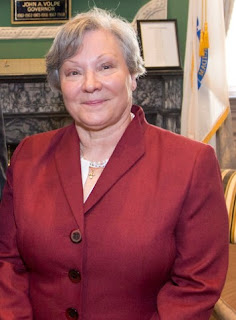
Mass. "Child Advocate" - and Boston
Globe favorite -- Maria Mossaides
● The way the state’s child advocate, Maria Mossaides, (who gets the Globe’s usual reverential treatment in this story) misdirected her own commission on mandatory reporting to the point that commission members rebelled. 

The failure is all the more egregious since all of this information is readily available in the records of Mossaides’ commission, which studied mandatory reporting between 2019 and 2021.  A huge body of witness testimony includes citations to the studies documenting all the points noted above.  If the Globe pored through this testimony – or even glanced at it – it is not reflected in the story.  Our own analysis of the commission’s work, with links to all that information the Globe left out, is available here.  A selection of links to some of the key testimony and research is here.  (Citations for any statistic or study not otherwise linked in this post can be found in either of these two documents.) 

Section-by-Section 

With that, let’s go through the story section by section. 

The donkey gets off the ground when it starts by profiling Kayla Ford, a mother who was victimized by repeated needless mandatory reports and investigations by the state family police agency, the Department of Children and Families.  (Oddly, for a story discussing racial bias, they chose a white mother.)  

The mother had an addiction to pills that turned into a heroin habit (A condition somewhat similar to that certain other Ford who, instead of being turned in, was treated by media as a hero – but I digress.) 

As soon as Kayla Ford learned she was pregnant she got treatment, including medication-assisted treatment – in this case Suboxone.  That is considered best practice – it is also often the subject of virulent prejudice among family police agencies.  And since this is Massachusetts, where the Puritan heritage remains strong, even medication used to prevent addiction makes you subject to automatic mandatory reporting.  That happened to Ms. Ford when her first child was born.  And her second. And her third, even though by then she’d been sober for six years. 


Even Mossaides concedes this goes a tad too far and is willing to see the state mandatory reporting law tweaked slightly for such cases. 

But while the story talks about how much strain all this put on the mother, it omits the most important part: The enormous harm needless investigation does to children.  

So it’s understandable that someone would write this in the comments section under the story: 

Sounds to me like in Ms. Ford’s case DCF involvement was not harmful in the end. Her kids were not taken from her and she is still sober. I’m struggling a bit to identify the problem mandatory reporting caused in her case. 

The commenter is struggling because: 

● The story didn’t explain that a child abuse investigation is not a benign act.  Having a stranger come to the door, awaken children in the middle of the night, pull them aside and question them about the most intimate aspects of their lives can be an enormously traumatic experience for a child. The caseworker will demand to see every room and look into every closet and cupboard. Often, it’s all accompanied by a stripsearch looking for bruises. If anyone else did that, it would be sexual abuse.  And if the family is put under “supervision” all this can happen over and over and over.  

As attorneys from The Children’s Law Center, a group that represents children in family policing cases - -  explain: 

children may experience “surprise, shock, [and] chaos” during a child welfare investigation, as well as a “loss of control,” “powerlessness, helplessness,” and a “sense of guilt or failure.” … Children involved in a child abuse or neglect investigation “may not know what’s going to happen in the examination or the interview,” which can be particularly traumatic because children are taught from a young age “not to talk to or trust strangers and not to let strangers touch their bodies; and these are strangers.” 

It’s no wonder parents of children who’ve been forced to endure these investigations sometimes speak of their children never wanting to let them out of their sight or diving under the bed when there’s a loud knock at the door.

● The story quotes Ford as saying “I remember toward the end of my third pregnancy being terrified that they’re going to bring DCF back into my life. I was thinking about that more than the delivery.” But the story does not mention the potential harm that can cause for a pregnancy – or for the siblings. 

● The story didn’t explain that all the time and effort wasted traumatizing this family -- three separate times -- was, in effect stolen from finding some of the few children in real danger. 

More generally, the story fails to come to grips with the myths about substance use and the ability to raise a child; so it’s understandable that those myths crop up, repeatedly in the comments. 

Then the story turns – very briefly – to the issue of the effectiveness of mandatory reporting; and ignores the research.  The effectiveness issue is confined to this paragraph: 

A wide expansion of mandated reporting laws elsewhere has, in some cases, failed to uncover a rise in abuse. In Pennsylvania, lawmakers expanded the pool of who qualifies as a mandated reporter in the wake of the Penn State University child sex abuse scandal. The result, according to an NBC News and ProPublica investigation: Investigations soared, but the number of actual substantiated allegations remained flat. 

First of all, it speaks volumes about the Globe’s longstanding failure on these issues that a news organization of its size had to rely on ProPublica and NBC News – apparently the Globe had nothing at all on this in its own archives. 

More important, the harm is far greater than that single paragraph suggests.  There is now an overwhelming body of research showing that mandatory reporting makes children less safe. 

● It drives families away from seeking voluntary help with their problems before those problems become a crisis.  

● Research confirms that the deluge of false reports brought on by mandatory reporting distracts overloaded workers from finding children in real danger.  

● Mandatory reporting does particular harm to children of battered mothers – because when they are torn from mothers whose only crime is to, themselves, be victims of domestic violence, the harm to the children is especially great.  

Time for the token quote from a Black person 

Some reporters at the Globe seem to have a lot of trouble quoting Black people about child welfare.  Here’s a case in point from 2020.  Things haven’t changed much.  In this story, America’s foremost scholar on family policing and race, Prof. Dorothy Roberts of the University of Pennsylvania gets exactly two sentences.  Here are the sentences: 

“It’s an extremely biased way of alerting the government to the risk of child maltreatment.  To say, ‘Let’s improve mandated reporting’ obscures what the problem is." 

That’s two more sentences than any other person of color got in the story.


And what is the problem?  You’d think the reporter would want to know.  And I’m sure Prof. Roberts, a member of NCCPR’s Board of Directors, would have been glad to tell him.  Either he never asked or he, or his editors, cut that part. 

So readers are left with no actual alternatives to “improving” mandatory reporting – only criticism of proposals to do away with it – again, with no explanation of the research behind those proposals. 

The Globe’s hero, state “child advocate” and fanatical proponent of mandatory reporting and polices that tear apart families, Maria Mossaides, gets far more attention:

“Since the pandemic, there has been a movement, both on the national and state level, to eliminate all mandatory reporting,” said Maria Mossaides, the state-appointed child advocate who believes the state mandated reporter law should be “cleaned up” but not thrown out. The movement has put a new focus on racial biases in reporting, which need to be addressed, she said, “but that doesn’t eliminate that there are certain children that need protection.”

Notice what Mossaides does. She equates mandatory reporting with child protection and suggests that abolishing mandatory reporting jeopardizes child protection.  But at no point, here or elsewhere, has Mossaides cited any research documenting that mandatory reporting actually improves child protection. Neither has the Globe.  In contrast, as noted above, there is a wealth of evidence that it makes children less safe.

Indeed, imagine for a moment the fury on the Left, including the Boston Globe, if any public official said we needed stop-and-frisk policing because even though it’s biased “there are certain people who need protection from crime.”

But Mossaides isn’t done.  She goes on to make statements that sound to this reader as though she thinks children might benefit from racial bias among mandatory reporters:

“Even when a reporter might be more suspicious of a Black family than the equivalent white family, that doesn’t mean that that child is not at risk,” she said. “There’s a discussion about what we do about racial bias that’s different from the obligation to protect children.”

By that logic, one should forget about waiting for reports altogether and simply investigate all Black families.  And again, imagine the fury on the Left if any politician said, “There’s a discussion about what we do about racial bias in policing that’s different from the obligation to stop crime.”

The idea that the two can be separated in family policing is enormously dangerous to children.

In Massachusetts, more than half of all Black children and more than half of all Hispanic children already are forced to endure a child abuse investigation.  But, for all racial groups, 69% of reports were false – that is, they did not even rise to the level that a caseworker would check a box on a form saying it might be slightly more likely than not that the allegation was true. (In Massachusetts the standard for checking the box is actually lower than the abysmally low “preponderance of the evidence” standard used in most states.)

Of those cases in which the worker did check that box on the form, 89% did not involve so much as an allegation of sexual abuse or any form of physical abuse.

Eleven percent of Black and Hispanic children in Massachusetts will be torn from their parents and
consigned to the chaos of Massachusetts foster care.  Even In those cases, again, 89% did not involve even an allegation of physical or sexual abuse.  Sixty-three percent did not include any allegation of substance abuse.

The only way to prevent this massive state-sanctioned assault on Black and Hispanic children is to understand that doing something about racial bias is absolutely essential in order to do something about child protection.

The mandatory reporting commission

Here’s how the Globe tells the story of the commission created to study mandatory reporting in 2019:

The state in 2019 created a first-of-its-kind commission, led by Mossaides, to examine the mandated reporter law. Its initial proposals were to greatly expand the number of people considered mandated reporters, as well as stiffen penalties for failing to report suspicions. Those recommendations drew heated criticism that the changes would only worsen a system that already disproportionately enters the lives of Black and Latino families.

The commission ultimately folded after two years without agreeing on any recommendations it could make to lawmakers.

But there’s so much more to it.

What actually happened was that Mossaides led the commissioners by the nose for more than a year, making sure they saw and heard only what she wanted them to see and hear.  Far into the process, Mossaides finally had to hold public hearings – and that’s when all hell broke loose.

Witness after witness cited that mass of evidence – and spoke movingly of the tremendous harm mandatory reporting has done to children and families.  To cite just one example, Jane Doe, Inc., The Massachusetts Coalition Against Sexual Assault and Violence zeroed in on the enormous harm mandatory reporting can do to the children of battered mothers.  The Globe journalists either ignored this testimony or never read it.

Luckily, the commission members paid more attention. Having heard what Mossaides never wanted them to hear, commission members declared themselves “shocked,” “surprised” and “taken aback.”  So they rebelled – refusing to rubber-stamp Mossaides’ recommendations.

It was all summed up by a member of the commission, Middlesex County District Attorney Marian Ryan:

I spent a lot of years thinking that [mandated reporting] gets us to a better place; I’m disheartened to hear maybe it really doesn’t – and even if it does, perception is reality.  A lot of well-credentialed, well-meaning experts think this doesn’t work. … I was taken aback to hear so much of that conversation. [Finding out if they’re right] should be Job One.

It’s been nearly a year since the commission issued its report. Wouldn’t a reporter with a modicum of curiosity want to get back to Ryan and other commissioners and ask what they think now?  Has anyone pursued Job One? How do they feel about how Mossaides handled the commission?  Did the commissioners feel misled when, for example, Mossaides falsely claimed that abolishing mandatory reporting would cost the state $400 million – and it turned out to be, maybe, $1.5 million at most?

But no; there is not one word in the story from anyone on the commission – except, of course, Mossaides.

So it’s no wonder another commenter on the Globe story would say this:

The director of the Massachusetts Office of Child Advocate, someone who lives these situations every day, says Massachusetts should keep the law but clean up its intent. Why would we listen to her? Experts, what do they know?????

Again, understandable. Because the story never tells readers that there are a huge number of experts who think Mossaides is flat wrong – and they have the research to back it up.  Nor are readers told that over the decades since mandatory reporting was instituted – with no study beforehand to figure out if it would actually work -- one former proponent after another has had second thoughts.

Among the first to express doubts is someone who was, for decades, one of the biggest names in Massachusetts child welfare (and no friend of family preservation) Dr. Eli Newberger.  In 1983 he wrote:

"Had professionals, like me, known then what we know now, we would never have urged on Congress, federal and state officials broadened concepts of child abuse as the basis for reporting legislation."

So apparently it was the Boston Globe that took the attitude: Experts, what do they know?????

A bizarre detour to Foxborough

Recall how the Globe story briefly acknowledges (by citing other news organizations) that when Pennsylvania vastly expanded mandatory reporting in the wake of a child sex abuse scandal (in which by the way, the perpetrator was a foster parent and group home operator) it didn’t work.

Yet at the end, the Globe suggests that somehow Foxborough, which did almost exactly the same thing for exactly the same reason, is some kind of model.

The Globe explains that after sexual abuse revelations in Foxborough

The town formed a so-called Child Sex Abuse Awareness Committee, and has now trained thousands of residents — including public works officials, town hall employees, and others who fall outside the mandated reporter law — in recognizing abuse or neglect.

“Our philosophy in Foxborough is, the more eyes aware and watching, the better. Why would we restrict that?” said Bill Dudley, a pastor at the Union Church of Foxboro and a member of the committee.

How about because turning everyone in town into a spy – free to enact their prejudices on anyone who is poor and/or nonwhite – will cause enormous harm to children?  Rev. Dudley doesn’t know that for a lot of reasons, not least because what is still probably the state’s most prominent news source has never told him.

The story goes on to quote the town’s state senator, who wants to further expand mandatory reporting:

“There’s a moral obligation [to report]. In my mind, this should be a statutory obligation.”

But notice what is missing in this entire section: any evidence that what they did in Foxborough actually reduced child abuse.  In fact, no evidence is offered to suggest things went any differently there than in Pennsylvania.

The story ends by noting that

Mossaides’ office, using a $200,000 legislative allocation, is preparing to launch a pilot course in all of the state’s public school systems in the fall that she said will both train teachers on how to spot signs of abuse and how to decide to actually file a report.

That’s like giving Donald Trump a $200,000 grant to teach proper handling of classified documents.

Maybe the donkey wasn’t supposed to fly

Perhaps my assumption that the story was a flying donkey is too generous.  There’s another possible explanation.

In 1983, former Washington Post editor Ben Bagdikian wrote The Media Monopoly, among the finest works of media criticism in American history and certainly among the most prescient. When I taught journalism, I used it as a textbook.

One of Bagdikian's important observations is how newspaper editors who have strong feelings about a story deal with the side of that story they don't like:

They cover it. Prominently. Once.

That's just enough for the editors to say to critics "Oh, we covered that. We even put it on the front page!" – when they know full well that anything covered only once has almost no impact. It's what's repeated over and over that leaves an impression.

This was even worse: The editors can now say they “covered” the controversy over mandatory reporting and racial bias in child welfare when really, they just pretended to.  Now they can go back to the usual grind of horror story coverage, always with an inflammatory comment by Maria Mossaides.  So Massachusetts can keep on tearing apart families, especially nonwhite families, at one of the highest rates in America.

Future posts will look at other recent examples of how the journalism of "child welfare" fails. 

Tuesday, July 21, 2020

Would a Senate bill (accidentally) end child abuse investigations in some states and counties?


Probably not. But the bill reveals how little lawmakers know about how child welfare really works.

            Last week I updated a previous post to this Blog concerning various proposed federal legislation to provide more money to child welfare in response to COVID-19. The update concerned a bill for which the full text was only recently released.  It’s called the “Child Welfare Emergency Assistance Act” and it’s sponsored by four Democratic Senators.

The update dealt with how governments would be allowed to spend $2 billion in additional federal funds.

But there’s another intriguing provision of the bill. It’s called “Requirement for De-escalation Strategies Relating to Interactions With Law Enforcement Authorities.” It requires governments to

(A) develop and implement de-escalation strategies to—
(i) reduce unnecessary interactions with law enforcement authorities for children, youth, and families coming to the attention of child welfare agencies and for children and youth in foster care; …
(iii) ensure that any involvement of law enforcement authorities in child abuse or neglect investigations, child welfare interventions, placement incidents, or court or administrative proceedings involving children or youth in foster care, is not coercive or intended to intimidate … 

But there’s a problem: There are places in the United States where law enforcement is in charge of all child abuse investigations.  In Nebraska, law enforcement performs initial investigations and decides whether or not to remove children.  That also is the case in six Florida counties.

There is no action government can take against a family that is more coercive than tearing it apart and consigning the children to the chaos of foster care. The threat of such action is pretty intimidating.  And almost all interaction between child abuse investigators and families is unnecessary since at least 80 percent of all reports they investigate – and probably far more – are false. 

So if federal law were to prohibit law enforcement from doing anything unnecessary, coercive or intimidating during a child abuse investigation, law enforcement could no longer lead child abuse investigations.

Of course even if such a bill became law – and it almost certainly won’t – the investigations wouldn’t really stop. At most, they would be transferred back to state or local child protective services agencies.  But Florida’s record suggests that would make no difference.

In Florida the change was made with the hope that it would lead to more children being taken from their families. The theory was that hardnosed cops wouldn’t be “fooled” by those awful parents who could sucker bleeding heart caseworkers.

In fact, when the transition was pending I heard such hopes – or fears, depending on who was expressing them -- and I said at the time nothing would really change.  At this time Florida was in the midst of one of its periodic foster-care panics. Workers already were rushing to tear apart families needlessly; turning over the job to people who might have some concept of things like “evidence” wasn’t going to make things worse.

Although it’s been a while since I’ve checked, as far as I know that turned out to be correct. I know of no pattern showing that counties where sheriffs do the investigating are more likely to take away children than areas where the responsibility remains with the Florida Department of Children and Families.  They’re equally awful.

That’s something sponsors of this bill, and all those rushing to suggest that money saved from defunding the police should be plowed into social work, need to understand. In child welfare, the caseworkers are the police.  They exercise the ultimate coercive power over another human being and they have more leeway to do it than the police who wear blue uniforms.

Consider another example from Florida: When law enforcement wanted to sneak into a home to do a search for marijuana plants but couldn’t get a warrant, they pretended to be DCF caseworkers because they knew the family wouldn’t dare keep them out!

As Professor Dorothy Roberts of the University of Pennsylvania Law School, a member of NCCPR's Board of Directors has written:

            I am concerned by recommendations to transfer money, resources and authority from the police to health and human services agencies that handle child protective services (CPS). These proposals ignore how the misnamed “child welfare” system, like the misnamed “criminal justice” system, is designed to regulate and punish black and other marginalized people. It could be more accurately referred to as the “family regulation system.”

            What we really need are laws that force CPS agencies to de-escalate their own attacks on families – attacks that often destroy children in order to “save” them.

Tuesday, February 21, 2017

A reporter whitewashes racial bias in child welfare

In former Los Angeles Times reporter Garrett Therolf’s world, white people “marshal data.” Black people rely only on “folkways.”

Therolf has left the building. But he left behind  a story
permeated with racial bias.
UPDATE, FEB. 22: Compare Therolf's failure to how Laura Nahmias covered the same issue for Politico New York.

Imagine for a moment that a reporter on the criminal justice beat wrote a story claiming that there are “two theories” about the police and the African-American community: Either there is more crime in poor Black neighborhoods - because there is more poverty - or there is police brutality, harassment, needless stop-and-frisk searches, traumatic interrogations of the innocent, false arrests, etc.

One would hope such a journalist would be laughed out of the newsroom.

But, as is so often the case, the standards for child welfare, and for reporting on child welfare, are lower.

That brings me to the last two stories begun by reporter Garrett Therolf before he left the Los Angeles Times last year. He completed them while at his new job and they were published last week.

Several years ago, Therolf faced a lot of criticism on this blog and elsewhere for his child welfare coverage. Therolf is certainly not the only reason Los Angeles tears apart children at a rate well above the average for big cities, double the rate of New York and triple the rate of Chicago, but he’s a part of it.

One of his last Times stories follows a particular case through the Los Angeles County child welfare system.  That story actually is pretty good - except when it tries to deal directly with issues of race. And there are serious problems with a sidebar devoted specifically to that issue.

The error of either/or


Therolf begins the sidebar by noting that while eight percent of Los Angeles County children are Black, they represent 28 percent of the county’s foster children.  Then he writes:

There are basically two theories, and the approach an agency takes to addressing the problem depends, at least in part, on which theory it accepts. One holds that social worker bias against black parents is to blame. The other argues that black children truly are victimized at higher rates.

So it’s either/or, all-or-nothing.  This eliminates the obvious possibility that, as with criminal justice, because of poverty, both can be at play.

The problem is even more complicated in child welfare. Most state laws, including California’s effectively define poverty itself as “neglect.”*  So it’s easy to point to statistics and say: See? There’s more “neglect” in Black communities precisely because there is more poverty there – and that poverty is confused with “neglect.”

In addition, child abuse is related, in part, to stress. Poor people tend to be under more stress than rich people, and African-Americans are more likely to be poor. So again, the key issue is poverty.

But in the main story Therolf claims that on top of all the stress of being poor, the "prevailing view" is that Black parents are more prone to abuse their children “following generations of deprivation and inequity.”  (In fact, there is no "prevailing view" - but it certainly seems to be Therolf's view.)

In other words, Therolf suggests, past racism makes Black parents abusive, but there is no present racism affecting the decisions of child protective services workers.

Sadly, there are people in child welfare who believe this.  In fact, even as the president of the International Association of Chiefs of Police, a group not known to be dominated by bleeding-heart liberals, issues an apology to communities of color for racial bias in policing, a faction of liberals in child welfare denies their field even has a problem.

Apparently unlike in the police force, and pretty much every other aspect of American life, child welfare workers are simply so much better than other people that they have acquired a kind of magical immunity from the biases that plague mere mortals.

This is reflected in the willingness of some of my fellow liberals to forego everything they claim to believe in about civil liberties and due process when someone whispers the words “child abuse” in their ears.  Consider how, as is discussed here, some liberals, appalled by stop-and-frisk, embrace the use in child welfare of  “predictive analytics,” a similar infringement on civil liberties that boils down to computerized racial profiling.

Harvard’s resident extremist


Then Therolf tells us about a 2011 conference at Harvard on the topic.  What he does not tell us is that the conference was organized by the leader of the “denial” movement – Prof. Elizabeth Bartholet of Harvard Law School.  Bartholet’s views on child welfare are so extreme that if one takes the recommendations in her own book bashing family preservation seriously and literally (and surely we’ve learned by now that this is wise when dealing with extremists) states would have to take away at least two million children every year.**

In her book, Nobody's Children (pp. 170,171), she also proposes that every family in America with a young child be required to let in a government-approved “home visitor” to inspect their home at regular intervals from the child’s birth until school age. The visitors would be required to report to authorities anything they considered a threat to a child’s safety or “well-being.”  Bartholet is explicit in recommending this for purposes of, her word, “surveillance.”

Bartholet says this “would simply provide society with a realistic means of enforcing” laws against abusing and neglecting children. So would a surveillance camera mounted in every room of every home with no way to turn it off. Perhaps Bartholet didn’t suggest this because George Orwell thought of it first.

Nor does Therolf tell us that the conference was an exercise in deck-staking.  Bartholet decided who was invited to speak, and almost every speaker she chose shared her views.  Having listened to this parade of people who’d already decided that racial bias is not a problem, Therolf then tells us that the “prevailing view” among researchers is that racial bias is not a problem.

He also tells us that “Many left the conference believing that any caseworker bias against black families accounted for only a small portion of the disparity in foster care rates.” Of course they did. It’s what they believed when they walked in the door.

Double standards for describing experts


But where the story becomes most condescending is in its treatment of experts on each side.  First, he gives one paragraph to one of the few dissenters Bartholet invited to speak at the conference.  He writes that those who believe racism is a problem

…gained encouragement from University of Pennsylvania law professor Dorothy Roberts, who said: “If you came to any child dependency court in Chicago, in Los Angeles or in New York and had no preconceptions about what the purpose of the court was, you would probably leave thinking its purpose was to monitor and regulate and even tear apart black families.” 

He never mentions that Prof. Roberts (a member of NCCPR’s Board of Directors) also is the author of several books on issues of race in America and beyond, including Shattered Bonds: The Color of Child Welfare (Basic Civitas Books, 2001).

Bartholet gets very different treatment.  There is no mention of her extremism. Instead, in a paragraph that sounds like it should have begun with “Some of her best friends are…” Therolf writes about how she was once, long ago, a real life civil rights lawyer for the NAACP Legal Defense fund!  (So of course, anything she says about child welfare and race could not possibly be tainted by bias.)  This is like suggesting Ronald Reagan could not possibly have been out to break unions or enact a radical right-wing agenda as president because decades earlier he’d been a liberal and a union leader.

Bartholet didn’t rely on mere anecdote, Therolf tells us. Bartholet “marshaled data to argue that when poverty and neighborhood characteristics are used to analyze foster care rates, race disappears as an explanatory factor.”

Compare this with Therolf’s treatment of the next expert to appear in his story, Cheryl Grills. Dr. Grills is a clinical psychologist and director of the Psychology Applied Research Center at Loyola Marymount University.  She also served as Co-Executive Director of the Los Angeles County Blue Ribbon Commission on Child Protection. 

But Therolf identifies her only as “a professor at Loyola Marymount” who, Therolf claims, wants to “institutionalize child protection based on African and African-American folkways, not the latest studies and academic research.” [Emphasis added.]

Got that everyone? White people “marshal data.”  Black people just want to rely on anecdote and “folkways.”

It is offensive, and speaks to the extent of bias not just in child welfare but in newsrooms, that the following even needs to be pointed out:

The data are overwhelming that there is, in fact,

racial bias in child welfare.


Much of that data can be found in Prof. Roberts’ book.  NCCPR has prepared a short summary of some of the studies finding profound racial bias, over and above the class bias and other problems that permeate child welfare.

Therolf goes on to suggest that caseworkers can’t possibly be biased because many of them are, themselves, Black. He dismisses the notion that institutional bias can push any caseworker to treat less favored groups differently. He ignores the scholarship of, for example, Prof. Tanya Cooper of the University of Alabama Law School, who writes:

Unconscious racism is embedded in our civic institutions; and the foster care system is vulnerable as one such institution controlled and influenced by those in power. Those in power in turn may unwittingly discriminate against people of color, which history demonstrates.

But also, the issue of bias isn’t so, uh, black and white.  If there is a racial, religious or ethnic group that doesn’t have to grapple with biases among themselves I have yet to find it. Often, though not always, the fault-line for intra-ethnic conflict is class.

In child welfare, racial bias and class bias combine to create a toxic mix for poor families of color.

Consider the very case on which Therolf focused.  The children were taken because the Los Angeles County Department of Children and Family Services (DCFS) alleged that, in Therolf’s words:

One: [The mother, Monique] Baker’s house is “filthy,” placing “the children at risk of physical harm, damage and danger.” Two: Baker is not taking her children for psychiatric treatment.
 Three:  Baker has “mental and emotional problems, including major anxiety disorder, major depression and PTSD, which renders the mother unable to provide regular care.”

But even if we assume all of these allegations are true, had a case such as this arisen in, say, Beverly Hills, DCFS never even would have noticed. It would have been solved privately by application of the following “preventive services”:

One: a maid.
Two: a nanny.
Three: a psychiatrist.

And that brings us back to Bartholet’s claim that “when poverty and neighborhood characteristics are used to analyze foster care rates, race disappears as an explanatory factor.”

Back before scholars such as Prof. Roberts marshaled all that data to show how pervasive racial bias is in child welfare, those wedded to a take-the-child-and-run approach insisted that agencies never take away children because of poverty.  Now, rather than admit to racial bias, they effectively admit to class bias.  I suppose that’s progress.

But neither bias should be tolerable in child welfare, and neither bias should be whitewashed by journalists.

* In California, neglect includes: “The failure or inability of the parent or guardian to adequately supervise or protect the child” and “The willful or negligent failure of the parent or guardian to provide the child with adequate food, clothing, shelter, or medical treatment.” 

**In her book, Nobody’s Children, Bartholet argues that children should be removed from the home in cases of “serious” abuse and neglect. In the same book (p. 61) she writes that “Estimates indicate that more than three million children a year are subjected to serious forms of abuse and neglect.” Even if she could be persuaded to leave one-third of “seriously” abused children in their own homes, that would mean taking away two million children every year.