Tuesday, January 17, 2023

NCCPR news and commentary round-up, week ending January 17, 2023

The Imprint profiles Sandy White Hawk, author of A Child of the Indian Race.  The book describes how she was forced into an abusive white adoptive home during the era of mass adoption of Native children, before passage of the Indian Child Welfare Act.  She went on to reclaim her Native identity and establish the First Nations Repatriation Institute in Minnesota – the state with the worst record of anti-Native racism in family policing. 

● Based on her extensive research, Prof. Kelley Fong writes in The Imprint about why the so-called Adoption and Safe Families Act is “A Dangerous Tool in An Arbitrary System.” 

● A terrible mistake by a former Arizona governor 20 years ago still reverberates today.  Now, a  new governor appears determined not to repeat it.  I have a column about it for the Arizona Republic. 

● There is more tragic evidence of the urgent need for change in Arizona in this Associated Press story about the death of a foster child.  Said the boy’s father: “They couldn’t keep him alive for two weeks, two weeks.” 

● Even at its worst Arizona looks good compared to Montana, which year after year tears apart families at one of the highest rates in the nation.  I have a post on this blog about a proposed law that might go a long way to change that.

Monday, January 16, 2023

Montana is a perennial candidate for child removal capital of America. The state family police agency wants to keep it that way. That's why it's fighting an excellent bill.

If the bipartisan bill becomes law, Montana's family police agency will no longer be able to do whatever it damn well pleases to whomever it damn well pleases, and plead its own incompetence as an excuse.  

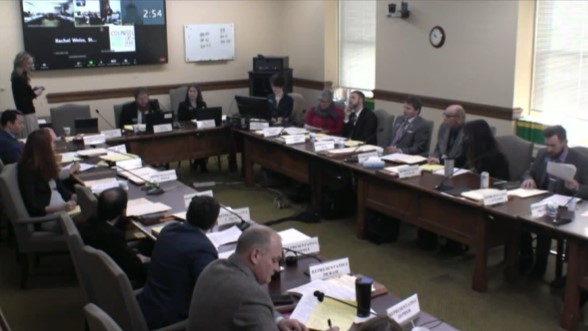
Last week, the Montana House of Representatives Judiciary Committee heard testimony
on a bill that could move Montana to the forefront of doing child welfare right

UPDATE, JAN. 25:  The Montana House of representatives Judiciary Committee passed the bill nearly unanimously.

Year after year, Montana tears apart families at the highest or second highest rate in America, even when rates of child poverty are factored in.  Just over a year ago, a performance audit by the Montana Legislature’s Audit Division confirmed that the all-purpose excuse for this offered up by the state’s family policing agency, the Child and Family Services Division (CFSD) – drugs -- was, to put it kindly, nonsense. 

But now, Montana has a chance to move to the forefront of doing child welfare right. 

The chance comes in the form of a bipartisan bill, HB-37.  The bill would: 

● Narrow Montana’s breathtakingly broad definition of “neglect” to exclude conditions related to poverty. 

● Specify the steps CFSD must take to make “reasonable efforts” to keep families together.  Federal law already requires reasonable efforts – but does not define them. 

● Require that impoverished parents be given a lawyer (in Montana that’s now discretionary). High-quality legal representation has been shown to significantly reduce foster care with no compromise of safety.  This provision is an important first step. 

● Require that CFSD get a warrant before putting children at risk of the enormous trauma of needless foster care. Such warrants can be obtained by phone or electronically and there are exceptions for genuine emergencies.  

Last week, the Montana House of Representatives Judiciary Committee held a public hearing on HB-37.  NCCPR testified via Zoom.  We also provided an in-depth written analysis of the bill and the underlying issues. 

But in this post, I’m going to focus on some of what happened at the hearing. 

During NCCPR’s testimony I predicted that sooner or later someone would invoke the Big Lie of American child welfare – that child removal supposedly equals child safety and child safety and family preservation are opposites that need to be “balanced.” 

And sure enough, one opponent of the bill did just that, telling the committee the issue is: 

“trying to balance the protection of children and … avoiding needless investigation, removals and the associated harm." 

That suggests that the more needless investigation and removals, the more that children are “protected.”  If that’s true, then Montana children must be safest from abuse (or second safest from abuse) in America!  There is, of course, no evidence for this.  In contrast there is plenty of evidence that needless removal does enormous harm to the children needlessly taken, puts them at high risk for abuse in foster care, and so overloads the system that workers have less time to find the relatively few children in real danger.  In short, Montana’s take-the-child-and-run approach makes all children less safe. 

There also is no evidence that Montana is a cesspool of depravity, with three times the rate of child abuse as the national average.  But apparently CFSD does not agree.  Because a CFSD official said: 

“Child and Family Services only removes children when it is unsafe and it is urgent and there are no other options to prevent removal.”
 So either Montana really is the child abuse capital of America – or CFSD is mistaken.  

Also: 

● CFSD bragged that the current horrible rate of removal in Montana is lower than it was a few years ago.  But the agency was selective in her use of figures.  Yes, in 2021, the most recent year for which federal comparative data are available, Montana’s rate of removal (again the worst or second worst in America) was lower than it was a few years ago.  But it remains higher than it was in every year from 1999 through 2014.  So what CFSD really is saying is that the agency went from a horrible rate of removal to an obscene rate of removal and now they’re almost back to merely horrible. 

And suppose this hearing had taken place a few years ago. Do you think CFSD would have said: Yes, you’re right!  Our rate of removal is outrageously high and unnecessary!  Or would the agency have repeated the same boilerplate it offered up last week? 

● CFSD was remarkably candid about its own lack of competence.  As noted earlier, the warrant provision in the bill would not require running down to the courthouse for a hearing.  In fact, it wouldn’t require a hearing at all.  All it would take is a phone call or an email explaining to the judge why the caseworker believed removal was the only option.   And again, this would not apply in actual emergencies – just as, if police want to search the home of someone they suspect is a child murderer, they must get a warrant – except in emergencies. 

CFSD’s response: Oh, but that would be soooooo hard, and soooooo onerous and sure, other states have done it, but they had to create a special form!   

There was similar whining about a provision that would require that, after CFSD drags a child away from everyone s/he knows and loves, there has to be a hearing within 72 hours.  Right now, in Montana, it can be anywhere from five to eight days.  For an adult that may not be much, but for a small child it’s an eternity.  But even though other states do it in less time, CFSD insisted that meeting even a 72-hour time frame would be just too difficult for them to manage. 

● Did the judges attending the hearing notice how CFSD insulted them?  During the debate on warrants, someone from CFSD said something like: Why bother!  As soon as there’s a hearing the judges always rubber-stamp our decision to remove the child anyway!  (CFSD didn’t use the term rubber-stamp, of course, but that was the message.) 

Unfortunately, judges probably do rubber-stamp CFSD far too often.   But that’s often because, especially at that first hearing, they’re getting only one side of the story.  The family typically either doesn’t have a lawyer at all, or has one they may have met five minutes before the hearing.  But another provision of HB-37 would start Montana toward changing this,  by requiring lawyers for all indigent parents going up against CFSD.  (Montana is one of the few states that doesn’t require this now.) 

But during the hearing one judge put CFSD on notice: The standard  boilerplate used by CFSD which boils down to little more than: “We took your child because we felt like it” is not enough to get a warrant.  

And that’s the real reason CFSD is opposed to the warrant provision and the rest of HB-37.  If the bill becomes law CFSD will no longer be able to do whatever it damn well pleases to whomever it damn well pleases, and plead its own incompetence as an excuse.  

Thursday, January 12, 2023

NCCPR in the Arizona Republic: Arizona still yanks too many kids from their parents. Can a new director fix this?

A mistake 20 years ago still reverberates today at Arizona's Department of Child Services. Gov. Katie Hobbs seems eager not to repeat it.

Even before taking office, Arizona’s new Democratic governor made clear she’s not about to repeat one of the biggest blunders of the last Democratic governor. 

That’s great news for the state’s vulnerable children. Indeed, to understand why Arizona’s child welfare system is a national disgrace, it’s essential to revisit the crucial mistake made by Janet Napolitano within days of taking office 20 years ago. ...

Read the full column here.

Wednesday, January 11, 2023

Update: Missouri’s take-the-child-and-run approach leads to tragedy

This agency's failure to follow federal law contributed to an unspeakable tragedy

Last fall, I took issue with how KCUR public radio in Kansas City handled a story about the failings of the state’s family policing system (a more accurate term than “child welfare” system).  In many ways, it was a good story, but it still missed the point.  I concluded it this way:

 This was certainly a better story than many, perhaps most day-to-day reporting on “child welfare.”  But the fact that even an excellent reporter producing an in-depth public radio story can use a case in which the only thing separating a family is housing, another case in which visits with children are being used as a “reward” for a parent, have a caseworker admit that children are in foster care needlessly, all in a state that tears apart families at a rate 50% above the national average – and still think the primary problem is a “shortage” of caseworkers, suggests that the journalism of child welfare has a long way to go. 

Two weeks later, the Missouri Independent showed a better understanding of the issue.   And I wrote a commentary about how the head of the state’s “child welfare” agency, Darrell Missey,  effectively admitted violating federal law requiring family police to make “reasonable efforts” to keep families together. 

Naturally, Missey has paid no price for this.  The same cannot be said for the mother who lacked housing, Shayla Curts.  In December, she was shot to death. 

As KCUR reports in this follow-up story, Shayla’s family is asking: 

Did problems with the Jackson County, Missouri, foster care system force Shayla into an unnecessarily risky living situation? 

“She would still be alive if they’d have put her, like they promised, in housing,” [Shayla’s mother] Dezirae said. “They were looking for housing, shelter or transitional housing, just somewhere she could take the kids.” 

Again it’s a good story. But again it misses the point.  It attributes the problem largely to a shortage of caseworkers, instead of the fact that Missouri is now tearing apart families at an even more obscene rate than before.  In the months since the original story, most of America got better – but Missouri got even worse.  Now, the rate of removal in Missouri is more than 80% above the national average.  The fact that Missouri tears apart families at the 10th highest rate in America is never mentioned in the story.  Neither is the issue of Missey’s failure to follow federal law.

Tuesday, January 10, 2023

NCCPR News and commentary round-up, week ending January 10, 2023

● A story I first wrote about on this blog last September has taken an unspeakably tragic turn. In a state that tears apart children at a rate 80% above the national average, a state where the head of the family police agency effectively admits violating federal law requiring “reasonable efforts” to keep families together, a tragedy like this should shock, but not surprise.  I have an update.

● Here’s the good news, as reported by The Arizona Republic: 

An Arizona woman who used medicinal cannabis to combat morning sickness during her pregnancy will have her name removed from the state’s child-abuse registry. 

Here’s the bad news: It took a decision of the Arizona Supreme Court to get this done. 

There’s a new study out from Rutgers University concerning children placed in foster care for 30 days or less – placements that always raise the question: If you could return the child in 30 days why did you take the child at all?  The study found that the children to whom this happened “are overwhelmingly Asian American, Black or Native American, raising questions about the impartiality of states’ child welfare systems and policies.”  The study also found that most of these children were placed in the worst form of care – they were institutionalized.

● From a story by WMAQ-TV Chicago

“My daughter rushed to the car and she’s like, ‘mommy DCFS came to the school, and the lady made it sound like we weren’t going to come home with you today,'" she said. 

What heinous crime against her child had this mother committed?  What had she done that was so awful that the trauma of a child abuse investigation was inflicted on her child, and her child left with the impression she couldn’t return to her family?  

Mom was late picking her up from school. 

It’s standard operating procedure for Chicago Public Schools to do this to children – and for DCFS (the Department of Children and Family Services) to investigate.  Good thing they don’t have anything else to do. 

Unfortunately Chicago is not alone. It also happens in Washington, D.C.

● A “home alone” case with a twist: The parents are affluent.  HuffPost looks at how racial and class bias affect how this case is being handled, compared to so many others. 

● And then there’s this New York Times story about how, over and over, politicians insist traffic congestion can be solved by widening highways – and it never works.  The problem is something called “induced demand.”  The new highway draws people away from alternatives, and soon all you have is the same traffic mess on a bigger highway.  What’s that got to do with child welfare?  Simple. The same thing happens whenever agencies think they can curb high caseloads with a caseworker hiring binge.

Tuesday, January 3, 2023

NCCPR news and commentary round-up, week ending January 3, 2023

ProPublica and NBC News wrapped up their extraordinary series on the harm of family policing with an urgent reminder that “In Child Welfare Cases, Most of Your Constitutional Rights Don’t Apply.”  They also published an update to their story about racial bias in family policing, a story that focused on Arizona.  Turns out one of the foremost critics of that system quoted in the story has an interesting new job.  You can read the entire series here

● At the end of 2021, NPR exposed the hideous practice of forcing parents to pay ransom to get their kids back from foster care. (No, of course they don’t call it ransom, but when someone takes your child and forces you to pay money to get the child back any other word for the payment is a euphemism.) The stories prompted the federal government to issue new guidance opposing the practice and several states and localities are promising to at least curb it. 

But in North Carolina, NPR now reports, you can have your children taken forever if you don’t pay ransom – even when the state never sends you a ransom note.  Check out the stories from Morning Edition and All Things Considered. 

Honolulu Civil Beat sums up its own outstanding reporting on Hawaii’s failed family policing system with an editorial called 'Grab And Go' Must Go. 

In the Boston Globe Magazine, Jasmine Wali of JMAC for Families writes about how, while “fresh out of college” and working for a foster care agency she worked with a young child she calls Violet who had been taken, needlessly, from her mother, whom she calls Jade: 

Violet and Jade were treated as if something was wrong with their minds rather than their circumstances. We had therapeutic interventions for Violet’s tantrums, but no plan for getting her family back together. CPS mandated therapy for Jade, when what she needed was affordable housing, transportation, and weekdays clear of appointments so that she could work. 

Does that health care worker who wants you to fill out a questionnaire about “adverse childhood experiences” think you’re really just a “mentally ill, violent, criminal deadbeat”? I have a blog post about how, in California, “child welfare’s” ACEs evangelists are saying the quiet part out loud. 

● Family advocates and defenders in New York have released a series of recommendations for narrowing the front door to family policing. The Imprint has a story. 

● In Reason, Lenore Skenazy tells the story of a Connecticut mother who dared to let her seven-year-old walk a mile home. 

● Remember all that fearmongering about the supposed need to rush to reopen schools during the COVID-19 pandemic – because, after all, what could be more dangerous for children than staying home away from the watchful eyes of mandated reporters, right?   That myth was, of course, thoroughly debunked.  And now there’s a study showing another way lockdown made children safer: a decline in teen suicide. 

And finally … 

● Moms are doing drugs during their kids’ play dates!!!  The few moms determined to stay sober are succumbing to peer pressure!!!  Call CPS!!! Well, that’s how the story would be covered if the moms were poor and nonwhite.  But these moms are neither – and since their drug of choice is wine, the only problem is the peer pressure, according to this column from The Washington Post.  The column is filled with stories about these drug-using moms extolling the joys of their drug.  In fact, it’s an entire “wine mom culture”!

Monday, January 2, 2023

In California, “child welfare’s” ACEs evangelists are saying the quiet part out loud


Does that health care worker who wants you to fill out a questionnaire about “adverse childhood experiences” think you’re really just a “mentally ill, violent, criminal deadbeat”? 

Check out these website comments, both from the same commenter, during a discussion of issues that touched on “adverse childhood experiences” (ACEs), the confusion of poverty with neglect and racial bias in “child welfare”: 

You can give some poor families a million dollar house and 20,000 dollars a month and it won’t make a dent in child abuse because as the ACE Study shows, we are dealing with character disordered Parents - Addicts, Alcoholics, Mentally Ill, Violent, Criminal, Deadbeats who abandon their own kids. 

It isn’t a racial issue either. There are plenty of Rural kids coming from Middle Class families that drop into poverty because they grew up w/ Character Disordered Parenting and because of it, they grew up character disordered. 

I’ve seen so many white Parents who sell their own kids’ bodies for Drugs - Methamphetamine, Oxycontin and now Heroine.  Or the mothers, so desperate to be loved by anyone take in Character Disordered Men who are only interested in sexually abusing her child.   No Amount of Money is going to end this dysfunctional, circular pattern.  [Bizarre use of capitalization in original.]

First, just for the record: Out of every 100 children reported as possible victims of abuse, 91 simply weren't - the report was screened out or found false after investigation. Six were "substantiated" victims of neglect, which often means simply that the family was poor. Three were said to be victims of sexual abuse or of physical abuse, from the most minor to the most severe.  I guess the commenter must have seen all of them.

Nevertheless, comments like those quoted above are common in certain vile corners of the internet and elsewhere.  But these comments weren’t made on Fox News or under a story in the New York Post.  They appear on a site supposedly devoted to science and, apparently, filled with doctors and other health industry professionals.  

Not just anyone can post.  You have to explain why you want the privilege, what you do for a living and the reason for your interest first.  (My own application is still pending.) 

Yet not one of these distinguished professionals challenged the comments.  No moderator took them down. 

You may be able to guess which site by the reference to “the ACE study.”  As noted above ACE stands for Adverse Childhood Experiences.  The study in question, from 1998, says that if a child experiences enough of them, it can cause serious health problems.  The study makes no reference to high scores meaning the subject’s parents are “Addicts, Alcoholics, Mentally Ill, Violent, Criminal, Deadbeats.” 

ACEs have become quite the fad. It began with that single study in which a ten-question survey was administered.  People were asked things like whether, as a child, they had witnessed domestic violence, whether they felt no one in their family made them feel important or special or whether they “didn’t have enough to eat, had to wear dirty clothes, and had no one to protect you.” 

From that has evolved an entire industry, in which doctors, mostly, extrapolate far beyond anything in that original study.  It’s another way for doctors to assert hegemony over what is actually a social justice problem and persuade people it’s a “public health” problem.  (Have you noticed now many doctors like to characterize pretty much everything as a public health problem?) 

Among those most alarmed by the misuse of the ACEs questionnaire: one of the doctors who invented it. 

The comments with which I began this post appear on a website called PACEs Connection. (It used to be ACEs Connection, but they decided it sounded better to add the P for Positive and Adverse Childhood Experiences.)  PACEs Connection describes itself as 

the human and digital catalyst that unites the people, organizations, systems and communities in the worldwide PACEs movement. We are its main information exchange and resource. And we are a support for hundreds of local, state and national ACEs initiatives. 

PACEs Connection which, remember, hosts the comments referenced above, to which no one objected, also describes itself as “an anti-racist organization committed to the pursuit of social justice.” 

My introduction to PACEs Connection began after I wrote a column for the online news site CalMatters concerning what is potentially the most dangerous use yet of ACEs – taking the original questionnaire, adding a few more questions that skew it even further toward confusing poverty with neglect and paying doctors who see poor people $29 a pop to administer the questionnaire to their impoverished patients.  Note that the payments are made only when doctors administer the questionnaire to patients on Medi-Cal, the state’s health insurance program for the poor. It’s all part of a giant $300 million “ACEs Aware” initiatve in California. 

My column for CalMatters began this way:

Two years ago, Dr. Robert Anda, one of the authors of the original study of Adverse Childhood Experiences, cautioned that the scores from questionnaires to screen children for ACEs could be “misappropriated” as a diagnostic tool. California does not appear to have listened.

“Inferences about an individual’s risk for health or social problems should not be made based upon an ACE score, and no arbitrary ACE score, or range of scores, should be designated as a cut point for decision making or used to infer knowledge about individual risk for health outcomes,” Anda wrote in 2020.

Other experts on childhood trauma, such as renowned researcher Dr. Bruce Perry and University of New Hampshire professor David Finkelhor, agreed.

Yet more than two years into a massive science-be-damned, ethically-questionable and albeit well-meaning experiment on overwhelmingly poor, nonwhite Californians, the only concern officials seem to have is that doctors haven’t done enough to surveil their parents and report on them to a state agency.

I also noted that Dr. Anda specifically singled out the California program for criticism. 

As I discussed in a previous commentary about the ACEs project, the questionnaire is problematic in itself, but far more problematic is who administers it and how it is administered.  The questionnaires are administered by people who also are mandated reporters of “child abuse” or “neglect.” Notwithstanding Dr. Anda’s specific warning against a “cut point,” the California guidelines include exactly that: four or more ACEs  are considered reason to refer the family for “services.”  

And who might doctors call to do that?  There are all sorts of complicated, time-consuming but genuinely useful things they might do.  Or they might just call the child abuse hotline.  Even if they know that can do enormous harm, they may feel obligated to do it because they are mandated reporters.  There is nothing in the questionnaire process that requires doctors to warn their patients about this before administering the questionnaire – in other words, no requirement for truly informed consent.  That is unethical. 

One of those who sees no problem with making that call to the hotline is Dr. Jeoffry Gordon, a frequent contributor to PACEs Connection. 

Gordon is almost certainly not a Fox News fan.  On the contrary, he spent decades working with Physicians for a National Health Program, a group calling for “a publicly financed, non-profit single-payer national health program” – in other words, a version of what Bernie Sanders wants: Medicare for all. Another of his columns in the PACEs site condemns opposition to the expanded child tax credit. 

But he also called for reauthorization of the Child Abuse Prevention and Treatment Act, an odious law passed with the deliberate intent of obscuring the confusion of poverty with neglect, and which created the federal framework for the current child welfare surveillance state – in which one-third of all children, and more than half of Black children, will be forced to endure a child abuse investigation before age 18, almost all of them due to false reports. (Anyone who knows what those investigations are like should realize that enduring it is one hell of an adverse childhood experience.) 

As this suggests, like so many of my fellow liberals, Gordon has a blind spot when it comes to child abuse – and a misunderstanding of how “child protective services” really works. 

The comments I’ve been quoting are under a response Gordon wrote to my CalMatters column, which he sent to me, and then posted at PACEs Connection, when CalMatters declined to run it in full (they published an abridged version).  It’s a useful example of what the Left keeps getting wrong. 

After acknowledging that the original questionnaire “was not intended to be comprehensive nor scientifically balanced and valid” he argues for using a not scientifically balanced and valid instrument in the way California is using it anyway because “it was intended to be a risk screen, not a diagnostic instrument. It is similar to asking if a patient smokes - not a healthy habit, but not indicating a diagnosis of emphysema or lung cancer.” 

Here’s the difference.  If you tell your doctor you smoke, there is no chance the doctor will call a hotline that will send government agents into your home where they may awaken you in the middle of the night, ask traumatic questions, stripsearch you and, possibly, take you away from everyone you know and love and put you in a factory that manufactures carcinogens. 

If you score too high on the ACEs questionnaire, and your doctor decides that’s reason to call the hotline that’s exactly what could happen. Because that’s what the adverse childhood experience of a child abuse investigation is really all about (except, of course, the toxic environment would be foster care, not a carcinogen factory).  

Gordon goes on to claim all sorts of benefits from ACEs screening in general, none of which requires having mandated reporters misuse the questionnaire as California is doing.  Most alarming, though, he says “Being a mandated reporter from a medical point of view is preventive medicine, not ‘surveillance.’” 

Imagine anyone on the Left, let alone anyone prominent in a self-proclaimed “anti-racist organization”  saying that “stop and frisk” policing is preventive, not surveillance. 

But somehow, when you say “child abuse” suddenly everything from midnight raids on homes, to stripsearching children (which, if anyone else did it would be sexual abuse), to poking through cupboards and closets, to asking children about the most intimate aspects of their lives, (and doing all this over and over again when families are placed under “supervision”) to inflicting foster care – which the California questionnaire itself acknowledges is an adverse childhood experience -- is all just “preventive medicine.” 

But we don’t have to worry about harm to families, Gordon writes, because “neither my clinical colleagues nor ACES Aware report instances of patient harms or complaints associated with the routine use of the ACE questions.”  

So the people who came up with this scheme and the people gleefully enacting it report no problems.  I’ll bet few police officers report harms or complaints about chokeholds or stop-and-frisk either. 

Gordon concludes by demonstrating exactly why the medical profession has done so much harm to so many families by imposing a medical model on a social justice problem. He writes: 

I also strongly agree with Mr. Wexler that there is strong evidence that provision of concrete and economic supports to poor, stressed families is very efficient and effective in mitigating abuse and neglect (ACEs). However, so far no government agency has offered to put dollar bills in my pharmacy along with the various vitamins and other medications." 

For decades, that’s been the excuse for keeping the massive child welfare surveillance state going: Well we should do something different, of course, and we would do something different -- if government handed us everything we need on a silver platter! 

Here’s why that’s so misleading: 

● You don’t need a lot of dollars.  Because poverty itself most often is confused with neglect, not simply a cause of neglect, a distinction Gordon fails to acknowledge, startlingly small amounts are needed to prevent it. 

● Those dollars don’t belong in your pharmacy anyway, Dr. Gordon, to be dispensed to those you deem worthy.  They should be administered by community-based community run organizations that don’t patronize the recipients.  New York City’s “unintended abolition” shows how well it can work. 

● The primary reason the dollars aren’t available is because doctors and so many others have been urging that scarce funds be spent elsewhere.  The California ACEs Aware program alone costs $300 million!  If the PACES Connection community pushed to use that money for basic cash assistance it would do far more to curb neglect than anything in Dr. Gordon’s pharmacy.  

Decades ago, in his book Families in Distress, Malcolm Bush explained exactly why that doesn’t happen: 

The recognition that the troubled family inhabits a context that is relevant to its problems suggests the possibility that the solution involves some humble tasks … This possibility is at odds with professional status. Professional status is not necessary for humble tasks … Changing the psyche was a grand task, and while the elaboration of theories past their practical benefit would not help families in trouble, it would allow social workers to hold up their heads in the professional meeting or the academic seminar. 

And that goes double for doctors. 

Yes, there are rare cases that fit the stereotype that commenter so loves (and which Gordon is willing to accept). But overwhelmingly, the one “medicine” that works is money – even in very small doses.  When it comes to “treating” almost all child “neglect” the rest of what’s in a doctor’s pharmacy is not “vitamins and other medications,” it’s snake oil. 

But of course, the veneer of benevolence among the ACEs evangelists was ripped away by that commenter I quoted at the start of this post. Deep down, for all the patronizing talk about helping, a whole lot of the PACES Connection community apparently agrees with her. 

And that includes Gordon.  True, in his own comment in response he acknowledges that there also are many parents who do not fit the commenter’s ugly description, for whom the stress of poverty might cause neglect (but again, no acknowledgment of how poverty can be confused with neglect). But he begins his comment with “To a great extent I agree with you.” 

When I expressed alarm about the first of the two comments in an email to Gordon, I was hoping he would respond that the commenter was an outlier, he regretted that she was part of the group and no one pays attention to hyer.  Instead, he  replied: 

Alas, [the commenter’s] observations serve to re-enforce for me the need for ACE screening at all socioeconomic levels and all ages and promotes the assertive use of therapeutic institutions and agencies which you have so strongly criticized. 

In that earlier commentary about the California questionnaire I concluded this way: 

The tragedy is that it actually makes sense to explore trauma and try to do something about it. However, thanks to mandatory reporting laws, it is much more difficult to do just that. 

You can have questionnaires to detect childhood trauma and pave the way to providing real help — or you can have mandatory child abuse reporting laws. You can’t have both. Since evidence shows mandatory reporting is a failure, it shouldn’t be hard to decide which to choose. 

But that may have been too optimistic.  Now that some of the ACEs evangelists have shown who they really are, it may well be too risky for any impoverished parent to fill out this survey even if reporting is voluntary.  Particularly if, at best, you doctor of other heath practitioner thinks turning you in to the family police is “preventive medicine” and at worst, thinks children with high ACEs scores have parents who are “Alcoholics, Mentally Ill, Violent, Criminal, Deadbeats.”